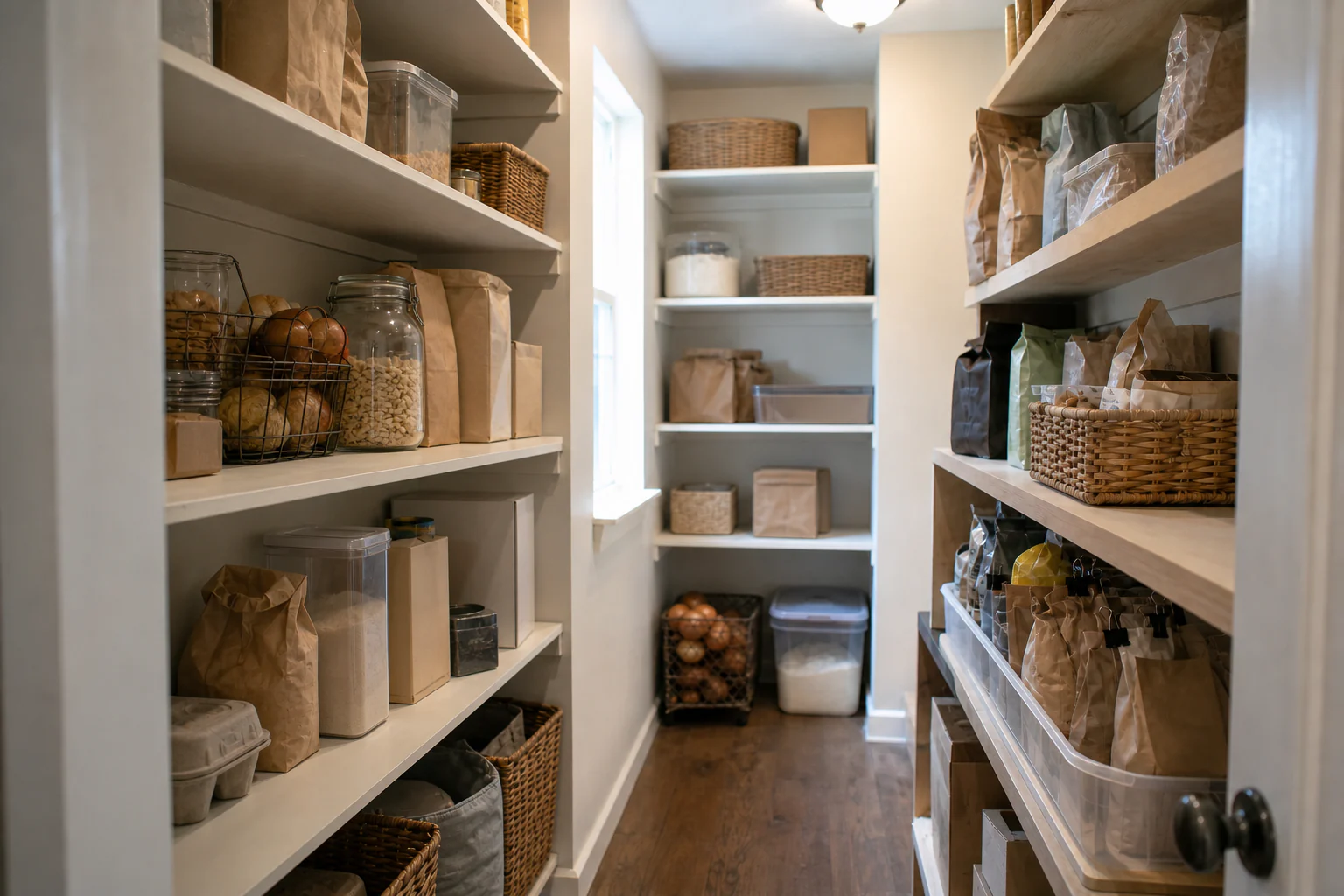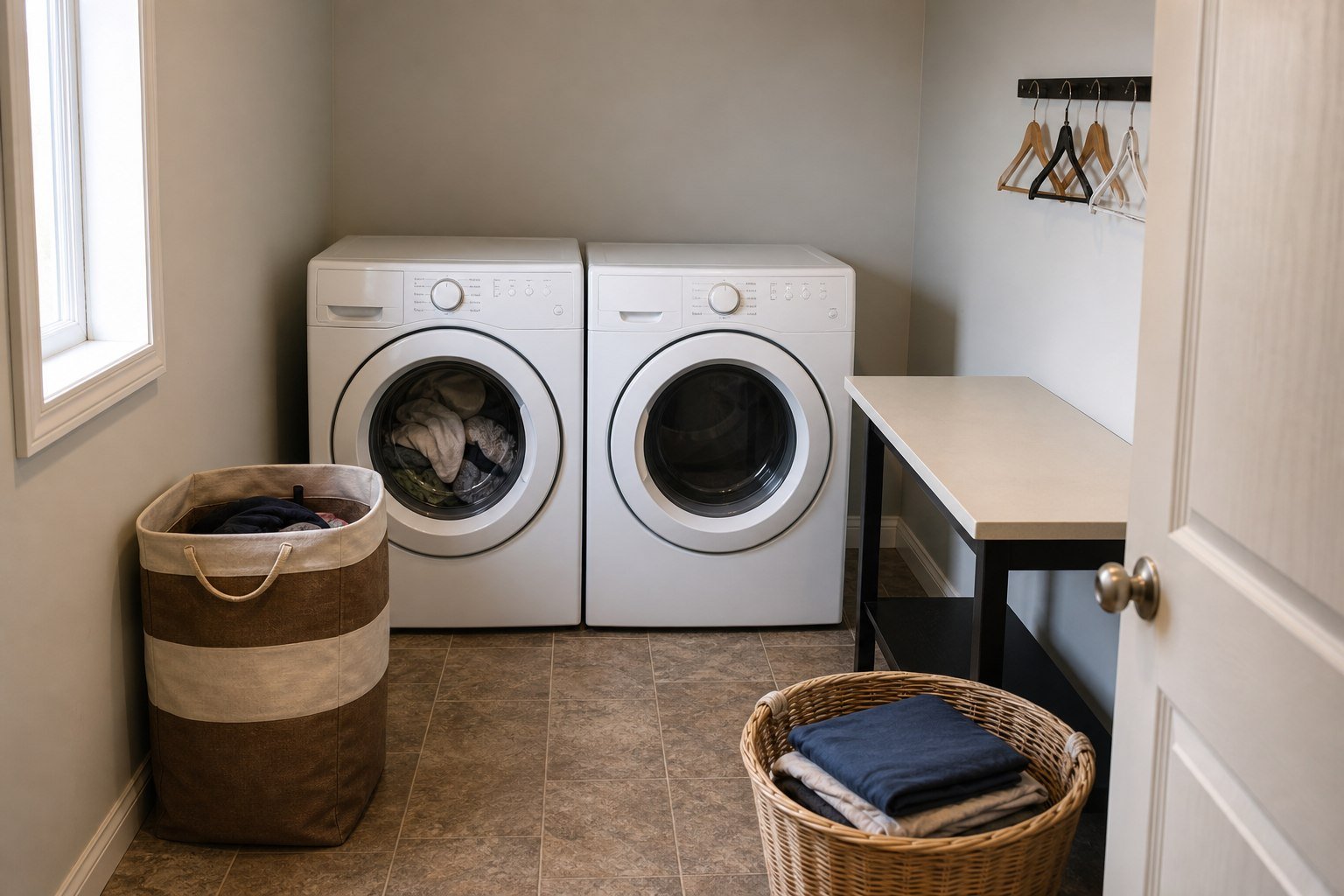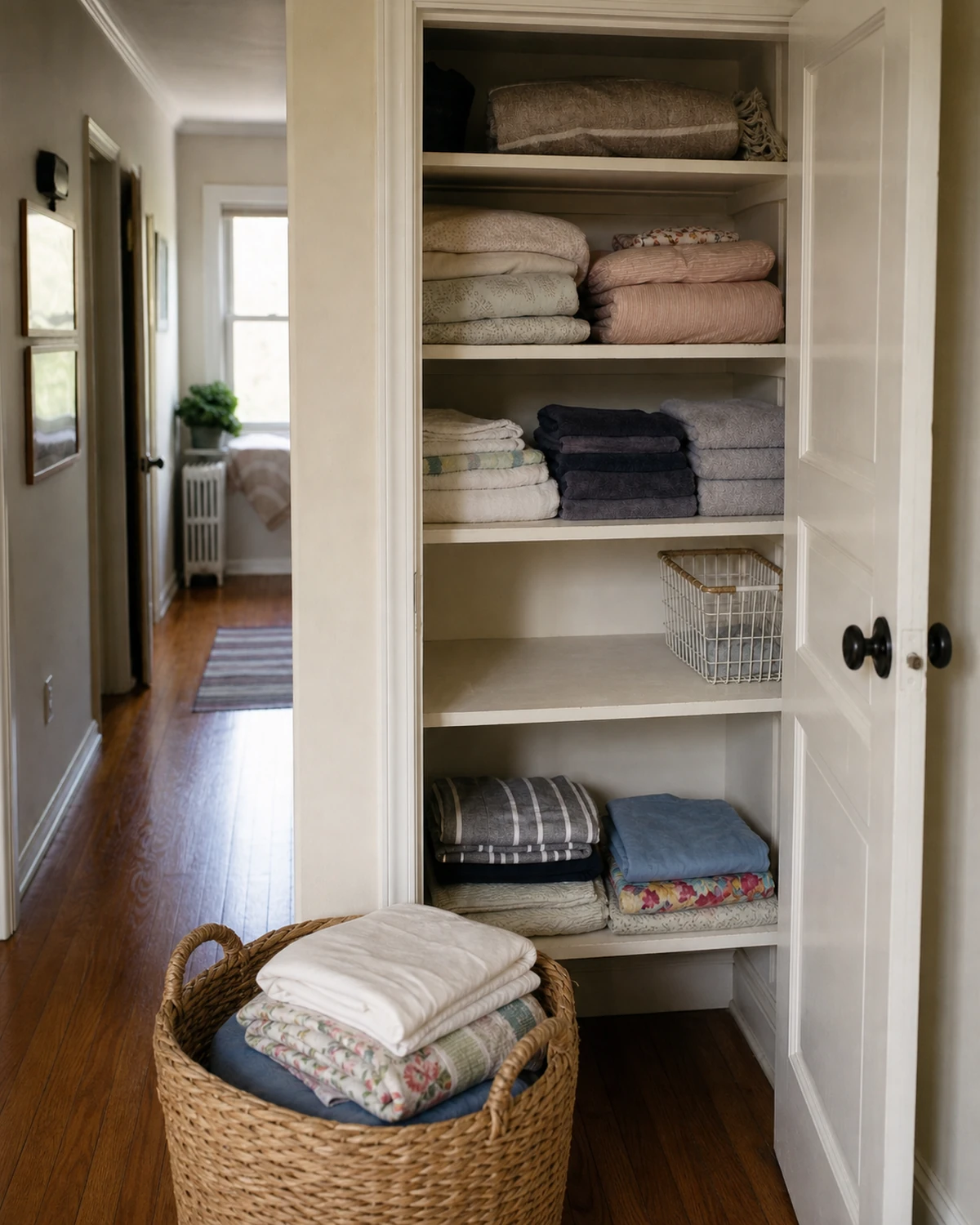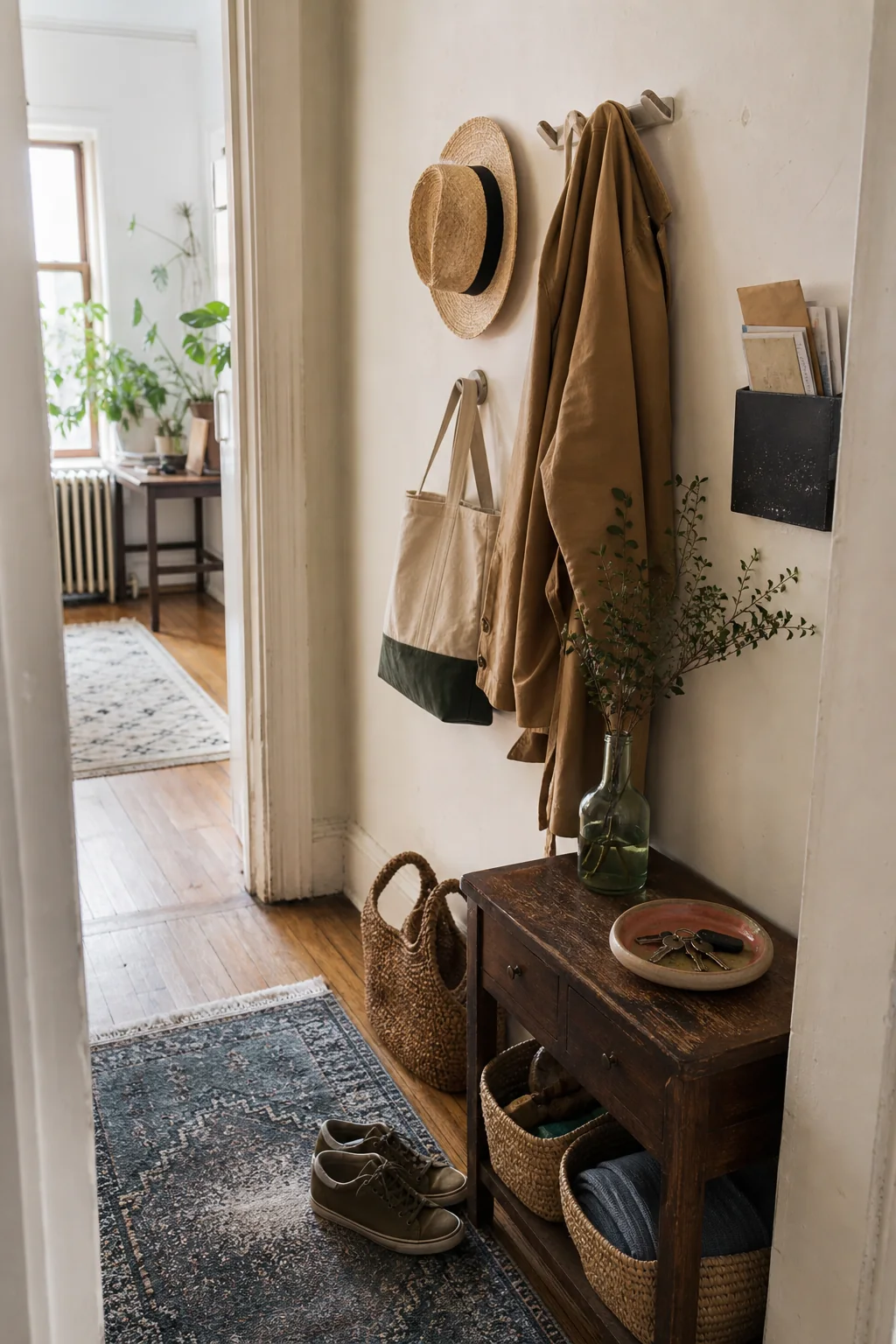
A beautifully organised home is not one where every possession is hidden in a matching basket. It is a home where everyday things are easy to find, easy to use and—most importantly—easy to put away.
If you have ever spent a weekend clearing a room only to watch the clutter return, you probably did not fail. More often, the system failed. Perhaps there was no sensible place for incoming post, the storage was harder to reach than the kitchen counter, or you bought containers before deciding what deserved the space.
The good news is that lasting organisation does not require a larger home, an expensive makeover or a ruthless clear-out. It starts with a few practical decisions about what you use, where you use it and how much your space can comfortably hold.
The quick summary
| Common mistake | Why it causes trouble | The better move |
|---|---|---|
| Tackling an entire room | The project expands faster than you can finish it | Complete one small, visible zone at a time |
| No designated home | Items settle on the nearest convenient surface | Store them close to where they are used |
| Ignoring walls and doors | Limited floor and cupboard space becomes overloaded | Use safe, accessible vertical storage selectively |
| Buying containers first | You organise things you may not need | Edit, group and measure before buying |
| Unstructured drawers | Small items mix together and become hard to find | Create simple zones with flexible dividers |
| Poor labelling | The system is unclear or too rigid to maintain | Use broad, useful labels everyone understands |
| Keeping “just in case” items | Unlikely future needs consume useful present-day space | Use a realistic keep-or-release test |
| No reset routine | Normal daily activity slowly undoes the work | Build in short daily and weekly resets |
1. Trying to tackle too much at once
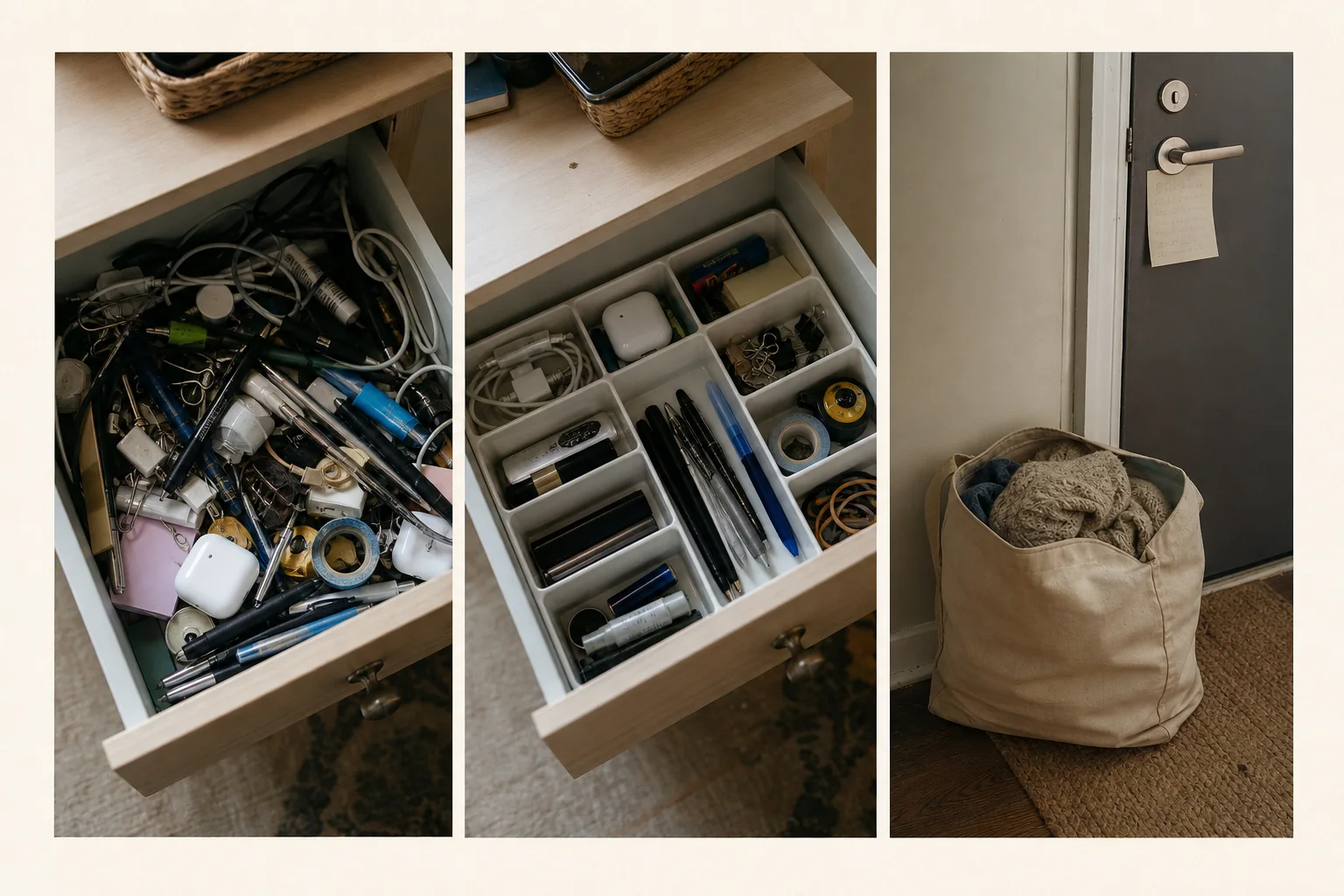
- 01The mixed drawer
- 02A home for each action
- 03The exit route
The dramatic version of decluttering begins by emptying an entire wardrobe onto the bed. It looks productive for ten minutes. Then the decisions multiply, energy fades, bedtime arrives and the room is less usable than it was before.
A better project has a finish line you can see. Choose one drawer, one shelf, one metre or three feet of worktop, or one category small enough to complete. “Sort the hall cupboard” is vague. “Make space for the shoes we wear this week” is specific.
Use the four-destination method
As you work, give every item one of four destinations:
- Keep here: it belongs in the zone you are organising.
- Move elsewhere: it belongs in your home, but not here.
- Leave the home: it will be donated, sold, recycled or disposed of correctly.
- Decide later: use one small container, not an unlimited pile.
The “move elsewhere” basket prevents you from walking into another room, noticing a new task and abandoning the first one. Put its contents away only after the original zone is complete.
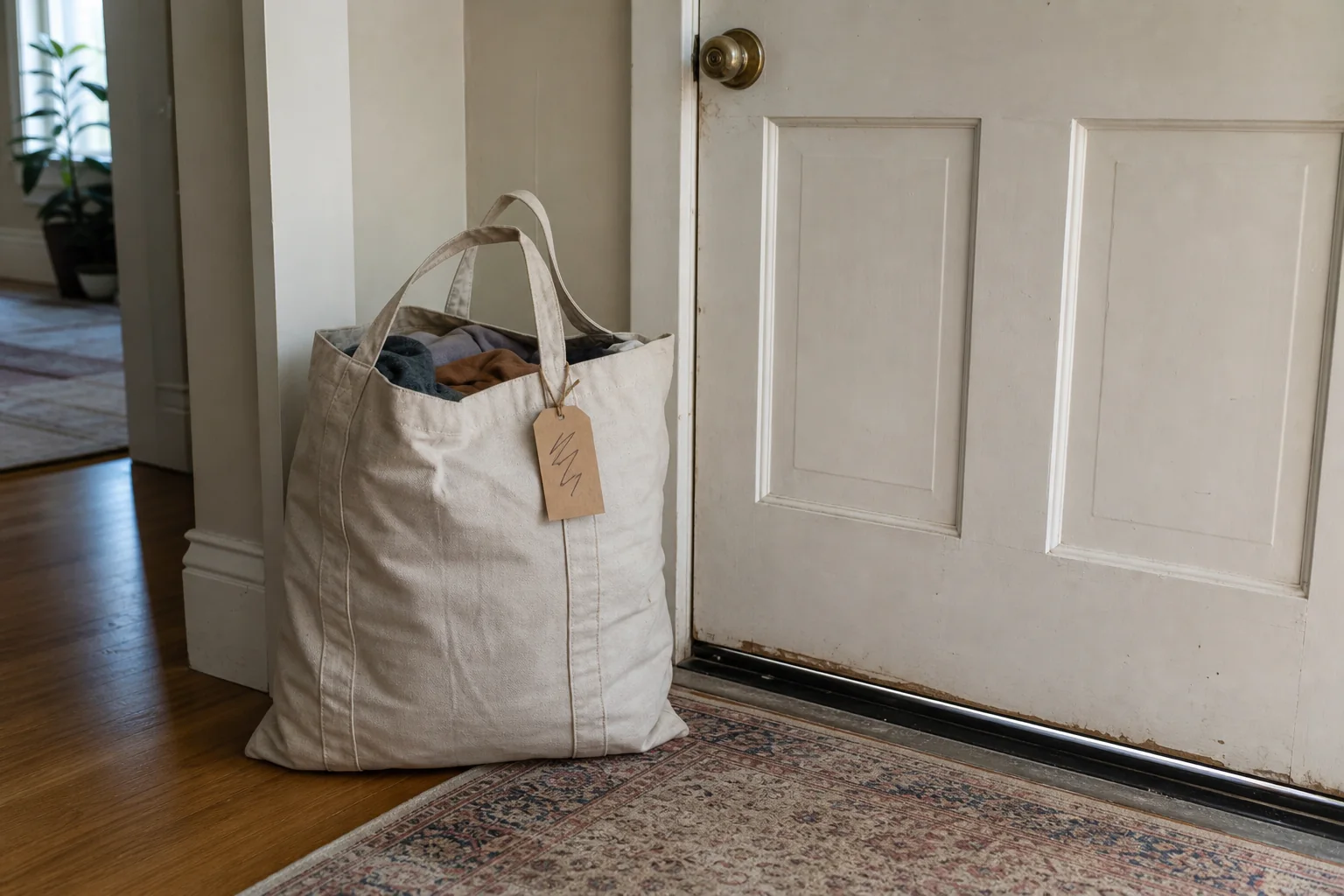
Build removal into the session too. A donation bag still sitting in the hallway is not finished decluttering; it is relocated clutter. Before you start, decide where outgoing items can actually go and when you can take them. Donation services differ by location and may reject damaged, recalled, incomplete or unhygienic goods, so check before making the journey.
Budget fix: use bags, delivery boxes and containers you already own while sorting. Attractive storage can wait.
Low-energy version: set a ten-minute timer and clear one surface without emptying any additional cupboards. Stopping after a genuinely finished micro-zone is progress.
2. Keeping items without giving them a home
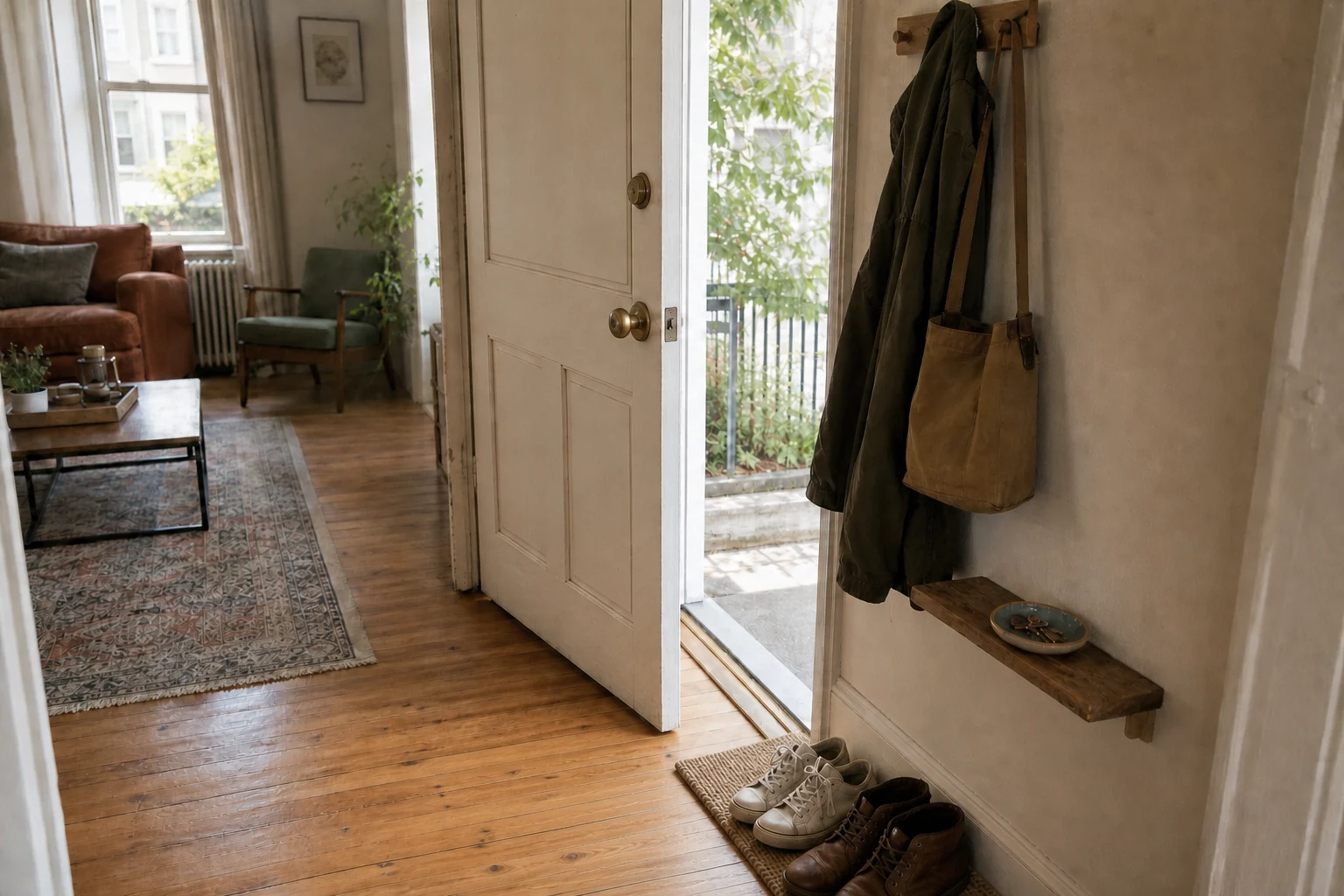
Clutter often gathers where an unfinished action happens. Keys land beside the door. Clothes rest on a chair between “worn” and “ready to wash.” Paper collects where it enters the home because the recycling, filing and action points are somewhere else.
Instead of asking, “Where can I fit this?” ask three better questions:
- Where do I use it?
- Where do I naturally put it down?
- What is the easiest acceptable way to return it?
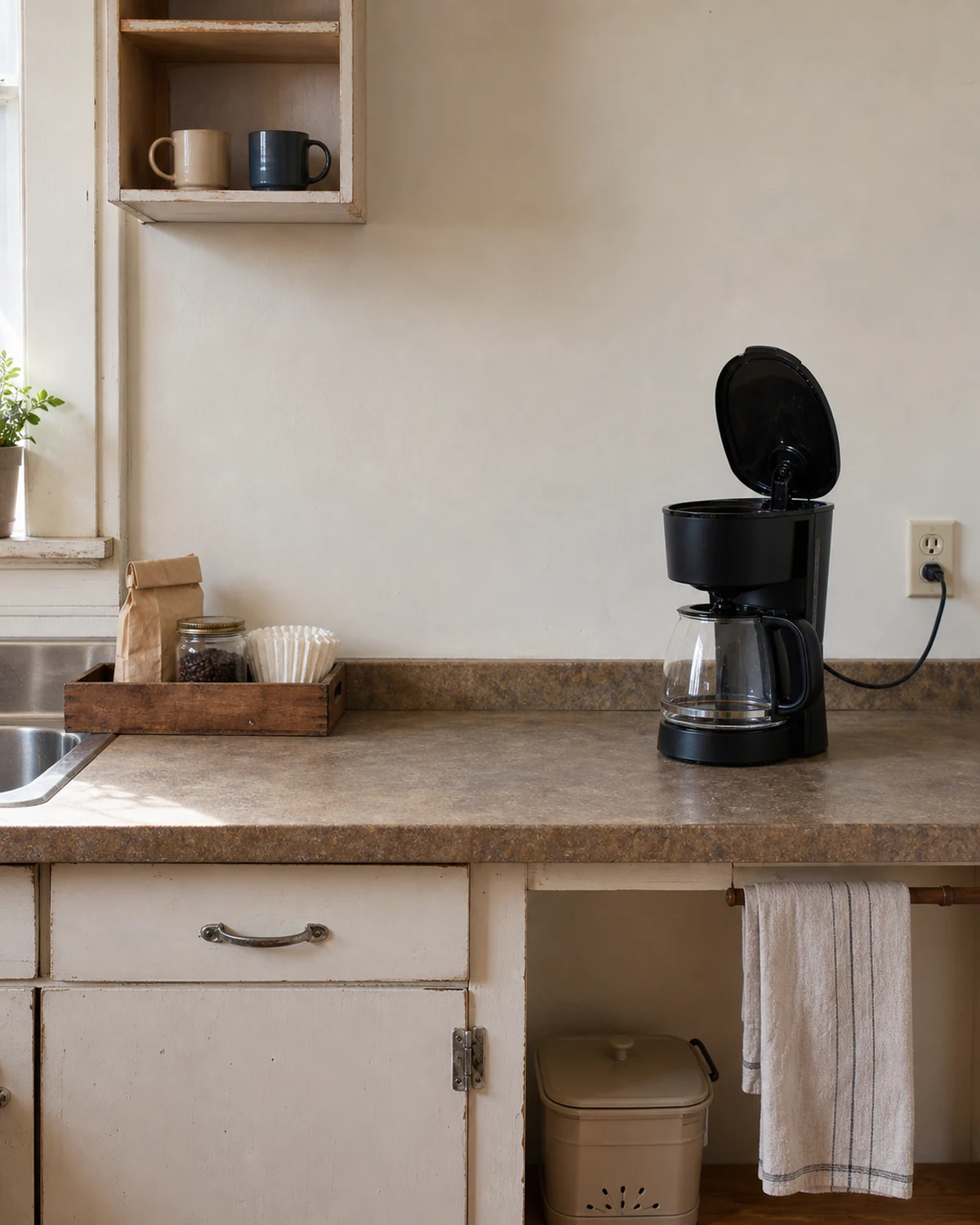
The best home for an item is usually near its point of use. Everyday mugs belong close to the kettle or coffee maker. Cleaning cloths are more useful near the rooms they clean than in a perfectly arranged but distant utility cupboard. A tray where household members already drop their keys will work better than a complicated organiser hidden behind a door.
Make the home easier than the pile
If putting something away requires opening a door, removing a box, lifting a lid and rearranging its contents, the nearby surface will win. Reserve the easiest-to-reach storage for the things used most often. Less-used and seasonal items can occupy higher, lower or more distant positions.
Every storage home also needs a capacity limit. A basket that comfortably holds six throws is a useful boundary; a basket packed so tightly that nothing can be returned is not. Leave a little breathing room so the system continues to work between resets.
For shared homes: choose locations that make sense to everyone, not only to the person who created the system. A two-minute household tour can prevent weeks of items being returned to the wrong place.
For renters: freestanding trays, over-door pockets, removable hooks used according to their instructions and existing furniture can create drop zones without permanent alterations. Always check your lease and the weight limits of removable fittings.
3. Overlooking useful vertical space
When cupboards are full, it is tempting to add another piece of floor-standing furniture. In a small room, that can reduce movement while leaving valuable wall, door and cabinet space unused.
Look upward—but do it selectively. A narrow shelf can hold frequently used jars. Hooks can give bags or tools a visible home. A rail inside a cupboard door can organise suitable lightweight items. A shelf riser can turn the unused air above a stack of plates into a second level.
What belongs high, and what does not?
- Keep heavy, breakable and frequently used items at a comfortable, stable height.
- Use upper storage for lightweight, less frequently needed belongings.
- Do not store objects where they can fall onto a bed, chair, cooking surface or walkway.
- Never reduce the clear width of a doorway, hall, stair or emergency route.
- Avoid arrangements that require unsafe climbing. If you need a step stool, use a stable one designed for the purpose.
Tall furniture requires special attention. The U.S. Consumer Product Safety Commission advises securing top-heavy furniture and televisions using appropriate anti-tip measures and following the manufacturer’s instructions. Wall construction and fixing requirements vary, so use suitable hardware and ask a qualified person when you are uncertain. Renters should obtain permission where required; safety takes priority over a deposit-friendly shortcut.
No-drill alternatives: try a stable shelf riser, a tension system rated for the intended load, an over-door organiser that does not prevent the door closing correctly, or hooks attached to an existing approved rail. Do not overload doors, fittings or temporary adhesives.
The aim is not to cover every wall. Empty space has a function too: it makes belongings easier to see, clean and reach.
4. Buying storage before reducing the contents
One-object decision tree
Give the object a destination before it returns to the pile.
Start with one repeat offender, not the whole room.
- Used hereReachable homeStore at the point of use.
- Used elsewhereRoute itMove it to the room where the action happens.
- Not usedExitDonate, recycle, or dispose safely.
Matching boxes create the feeling of a fresh start, but containers do not solve excess. They can make it easier to keep forgotten duplicates, worn-out objects and things that never should have occupied prime space.
Use this order instead:
- Edit: remove rubbish, expired goods, unusable items and anything you have confidently decided to release.
- Group: bring genuinely similar items together.
- Choose a location: base it on use, access and safety.
- Measure: record internal width, depth and height, including hinges, pipes and door clearance.
- Test: use a temporary box or tray for a week.
- Buy only if needed: choose a container that fixes a specific problem.
Measure the objects as well as the cupboard. A beautiful shallow basket is useless if the bottles must lie down and leak. Allow enough clearance to lift a container out and enough spare capacity to put things back without a puzzle.
Before purchasing, shop your home. A clean shoebox can test a drawer layout. A jar can hold brushes or pencils. A small delivery box can reveal whether a pantry category needs one container or two. Once the arrangement has survived ordinary life, you can decide whether an upgrade would improve durability, cleaning or appearance.
The environmental case supports this order. The U.S. Environmental Protection Agency places reducing and reusing ahead of creating new waste and suggests maintaining, repairing, borrowing and sharing where practical. Local reuse and recycling options vary, so confirm what is accepted in your area rather than “wish-cycling” an unwanted item into the wrong bin.
Useful buying rule: do not buy a storage product unless you can name its category, exact location and maximum dimensions.
5. Treating drawers as open boxes
A drawer hides visual clutter, but without internal boundaries it becomes a small jumble that must be searched every time it opens. The answer is not necessarily a custom insert. It is simply to stop unrelated objects migrating into one another.
Create zones around real use
Empty one drawer, wipe it, and group the contents by function. In a desk drawer, that might mean writing, charging, mailing and small tools. In a kitchen drawer, it might mean everyday utensils, measuring tools and food-preparation accessories.
Return only the categories that belong there. Then use the lightest structure that keeps them separate:
- adjustable dividers for changing categories;
- small open trays for objects used together;
- clean, sturdy boxes cut to a safe height for a free trial layout;
- a non-slip liner where appropriate to reduce sliding;
- vertical file-style storage for suitable folded textiles, so each item remains visible.
Avoid subdividing for its own sake. One section for “pens” is usually more maintainable than separate slots for every colour. A system should reduce the number of decisions required to put something away.
Place the most-used items at the front. Keep sharp tools protected and inaccessible to children. Do not force overfilled drawers closed; objects can catch, damage runners or prevent the drawer opening when you need its contents.
The visibility test: after organising, can you find and remove the item you want without lifting three other things? If not, the drawer still contains too much or needs a different arrangement.
6. Using no labels—or far too many
Labels are useful when a container hides its contents or several people must follow the same system. They are less useful when they turn a flexible cupboard into an administrative project.
Choose broad language that reflects how your household thinks. “Breakfast” may be more useful than separate containers for oats, cereal, spreads and toppings. “Cables” is too broad if it produces a knot of unidentified leads; “daily charging” and “spare tech” may be enough.
A good label answers a real question
- What belongs here?
- Where should I return this?
- Is this safe for everyone in the household to access?
- When should this be checked or used?
Use large, readable type and strong contrast. Pictures or simple symbols can help younger children and household members who use different languages, but never rely on a homemade symbol for safety-critical information. Keep original product labels and hazard instructions intact.
Dates can be useful for a freezer, temporary decision box or stored paperwork, but labels are not a substitute for appropriate storage and current official guidance. Food, medicines, chemicals and safety equipment each have their own requirements.
Review labels after a week. If a basket repeatedly receives items that do not match its wording, the household may need a different category—not more discipline. Relabel the system around actual behaviour.
Stylish without being fussy: use one label style, one typeface and consistent placement. Handwritten card works perfectly well if it is clear and easy to replace.
7. Keeping everything “just in case”
“I might need it” is true of almost any object. The more helpful question is whether keeping it is the best solution to that possible future need.
For an ordinary, non-sentimental item, ask:
- Have I used this within a realistic cycle—this week, season or year?
- Do I already own another item that performs the same job?
- If I needed it, could I borrow, rent, repair or replace it reasonably?
- Is it complete, safe and in usable condition now?
- Is the space it occupies more useful for something I use regularly?
This is not a rule that everything unused for a year must go. Emergency supplies, important records, accessibility equipment, cultural items, specialist tools and seasonal belongings have different purposes. Sentimental possessions deserve a slower process than spare food containers.
When you are genuinely unsure, create one bounded “decision later” box. List the contents, add a review date and store it somewhere that does not displace everyday essentials. At the review, notice whether you retrieved anything. The box provides evidence without allowing indecision to spread across the home.
Release responsibly
Usable belongings may be suitable for resale, donation, repair or a local sharing group. But some items require specialist handling. Paints, pesticides, oils, some cleaners and batteries can fall under household hazardous-waste rules. The EPA advises checking with the relevant local waste or environmental authority rather than pouring such materials into drains, onto the ground or into stormwater systems.
Battery and electrical-waste rules also differ internationally. For example, current UK government guidance directs consumers to designated collection points rather than ordinary household rubbish. Wherever you live, follow the product instructions and your local authority’s current rules.
Do not pass unwanted prescription medicine to another person. Disposal instructions vary by country and by medicine. Use an authorised take-back route where available, or ask a pharmacist or local health authority what applies to that specific medicine. In the United States, the FDA recommends take-back options for most unused or expired medicines and provides separate instructions when one is unavailable.
8. Expecting the house to stay tidy by itself
Why tidy rooms drift
A seven-day reset is a loop, not a finish line.
The smallest repeatable reset protects the system better than a heroic clear-out.
- Day 1NoticeMark the first repeat pile.
- Day 2NameIdentify the missing home.
- Day 3MoveShorten the route.
- Day 7Keep?Retain only what worked.
A lived-in home moves. Meals are prepared, bags arrive, laundry changes state and projects spread out. A sustainable system does not prevent that movement; it provides a quick route back to a comfortable baseline.
Try a three-level rhythm:
- Daily, 5–10 minutes: return high-traffic items, clear the main preparation surface and reset the entry.
- Weekly, 15–30 minutes: empty collection baskets, deal with paper, return wandering items and prepare outgoing donations or recycling.
- Monthly or seasonally: check one high-pressure category such as children’s clothes, food storage, toiletries or tools.
Attach the reset to an event that already happens: after the evening meal, before starting a film, when closing the kitchen or before leaving on bin-collection day. Keep the routine small enough to complete on an ordinary weekday.
Make it shared where possible. Assigning zones is often clearer than asking everyone to “tidy up.” One person can reset the entry while another clears the living-room surfaces. Children can return age-appropriate items to picture-labelled containers.
When the same category overflows every week, do not simply reset it harder. Diagnose the problem. Is the storage too far from where the items are used? Is the opening awkward? Does the category need more capacity—or fewer contents? Is a household member unable to reach it comfortably? Rework the system until returning an item feels obvious.
Remember: the reset is maintenance, not a verdict on how well you keep house. A ten-minute recovery that happens regularly is more valuable than a perfect system nobody can sustain.
A 45-minute decluttering rescue plan
If you want a calmer room today, use this contained reset:
- First 5 minutes: choose one visible zone and remove obvious rubbish. Do not open unrelated cupboards.
- Next 10 minutes: collect items that belong elsewhere in one basket.
- Next 10 minutes: group what remains by use and remove confident donations or recycling.
- Next 10 minutes: assign each kept category an accessible home using containers you already own.
- Final 10 minutes: put away the “elsewhere” basket, move outgoing items to their next legitimate destination and wipe the cleared surface.
If you run out of time, stop introducing new decisions. Finish the current category, restore safe movement and schedule the next small zone.
The keep-it-organised checklist
- Start with one finishable zone.
- Keep doors, stairs, windows and escape routes clear.
- Give every frequently used item an accessible home.
- Store belongings near their point of use.
- Edit and measure before buying containers.
- Use vertical space without creating a falling or tip-over risk.
- Give drawers simple, flexible zones.
- Label only where the label improves understanding.
- Set a capacity limit for each category.
- Plan the real destination of donations and specialist waste.
- Build in a short daily or weekly reset.
- Change any system that repeatedly fails your household.
Frequently asked questions
Should I declutter by room or by category?
Use whichever creates a finishable project. A small category such as everyday mugs can reveal duplicates across several cupboards. A contained zone such as one bedside drawer is better when gathering a whole category would create too much disruption. Avoid emptying more than you can comfortably restore in the time available.
Can I declutter my whole home in one weekend?
You can make a visible difference, but a complete home usually contains more decisions and disposal logistics than one weekend allows. Prioritise safety, high-traffic surfaces and one or two pressure points. A rushed clear-out can result in regret, waste or bags with nowhere to go.
What if another person in my home does not want to declutter?
Start with your own belongings and shared functional needs, such as keeping an entry clear. Do not discard another person’s possessions without agreement. Discuss the practical problem—“we need a usable dining table”—and agree on boundaries, storage capacity and a review time together.
How do I organise a very small home?
Prioritise multi-use space, easy daily returns and strict category limits. Use safe vertical storage, the backs of suitable doors and furniture with useful enclosed capacity. Avoid filling every gap: a small home still needs clear movement, accessible essentials and some visual rest.
How should I handle sentimental belongings?
Separate them from ordinary decluttering. Choose a calm time, identify what the object helps you remember and keep the examples that carry the most meaning. A defined memory box, display area or digital photograph may help, but there is no need to force a fast decision after bereavement or a major life change.
Where should unwanted items go?
That depends on their condition and local services. Confirm donation criteria before dropping goods off, use authorised electronics and hazardous-waste routes, and follow local rules for recycling. Medicines, chemicals, batteries and electrical items should not be treated like ordinary household clutter; check current product and local-authority guidance.
A calmer home is built around real life
The most successful organising systems are rarely the most elaborate. They are the ones that respect the size of the home, the routines of the people living there and the amount of effort available on a normal day.
Start small. Make one useful surface easier to use. Give the objects that land there a sensible home. Then repeat. The result may not look like a showroom every hour—and it does not need to. It will feel lighter, work better and recover more easily after life happens.
About the visuals in this guide
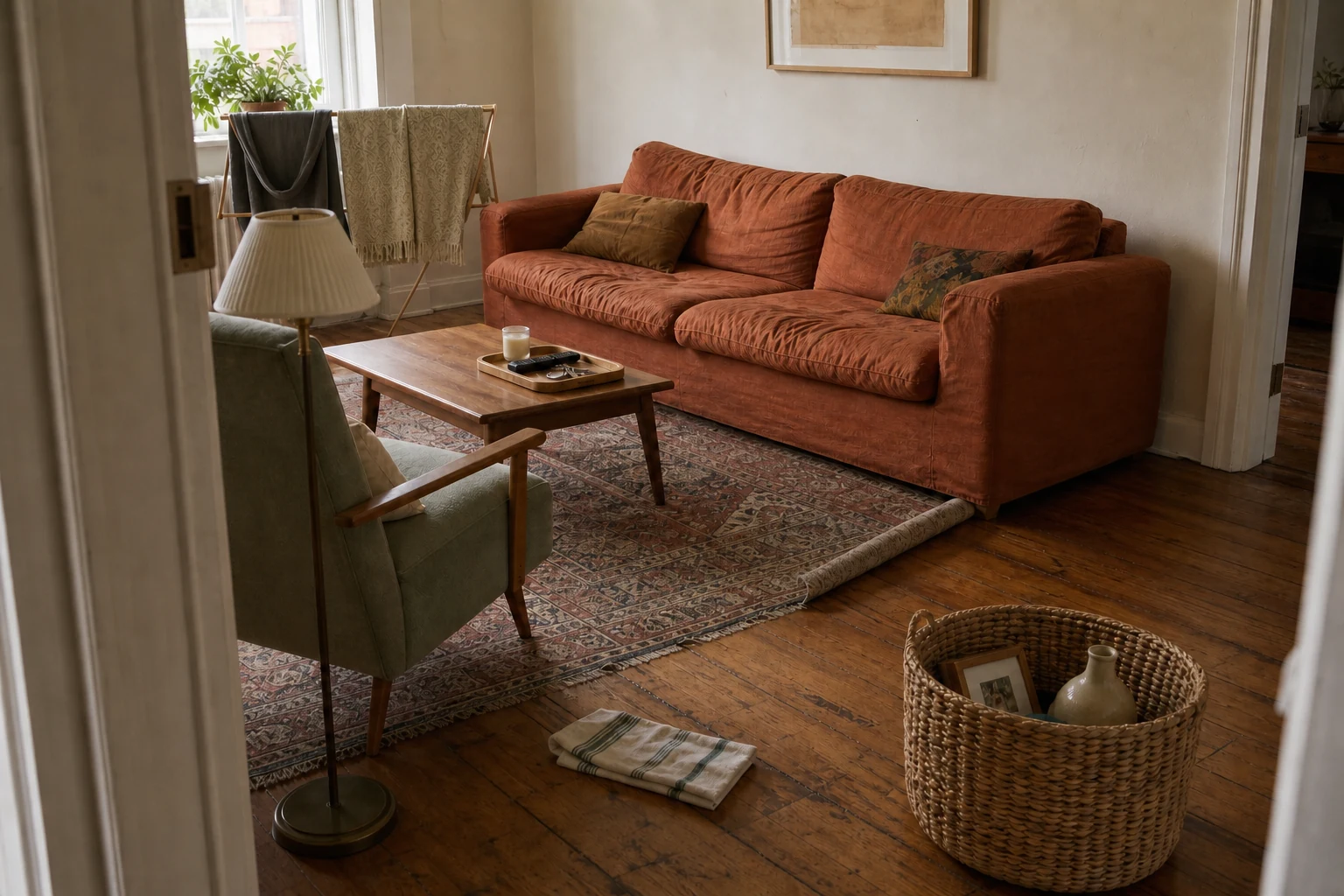
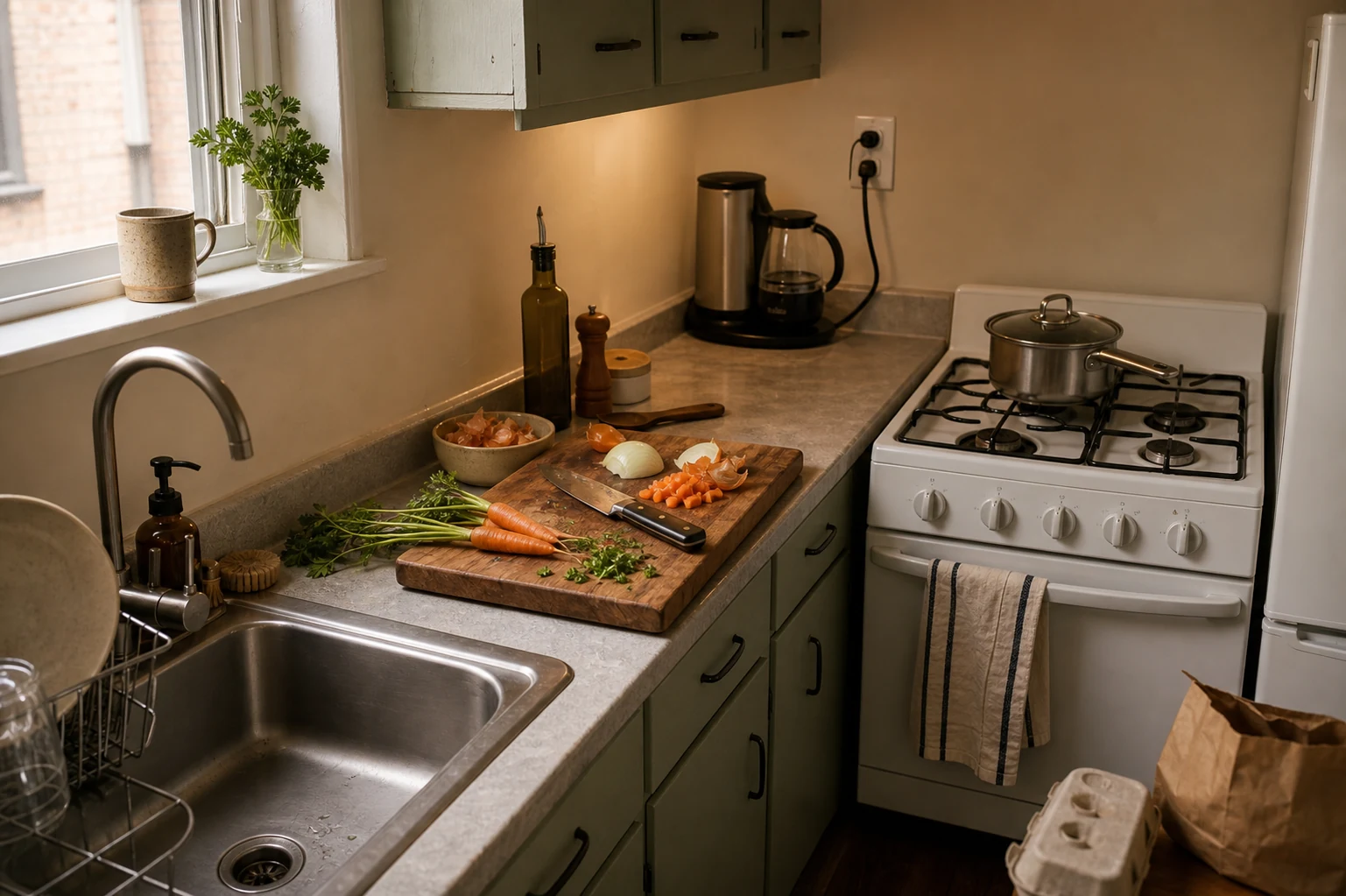
These are original Dealsmaster editorial illustrations produced with AI assistance for explanation and inspiration. They do not document a real household, tested installation, reader result, or professional inspection.
Sources and further guidance
Waste, recycling, medicine and building-safety rules vary by country and municipality. The following primary sources support the general safety and disposal guidance in this article; readers should also check the current rules where they live.
- U.S. Environmental Protection Agency: What You Can Do
- U.S. Environmental Protection Agency: Household Hazardous Waste
- U.S. Consumer Product Safety Commission: Anchor It
- U.S. Fire Administration: Home Fire Escape Plans
- U.S. Food and Drug Administration: Disposal of Unused Medicines
- UK Office for Product Safety and Standards: Recycling Batteries and Electrical Waste