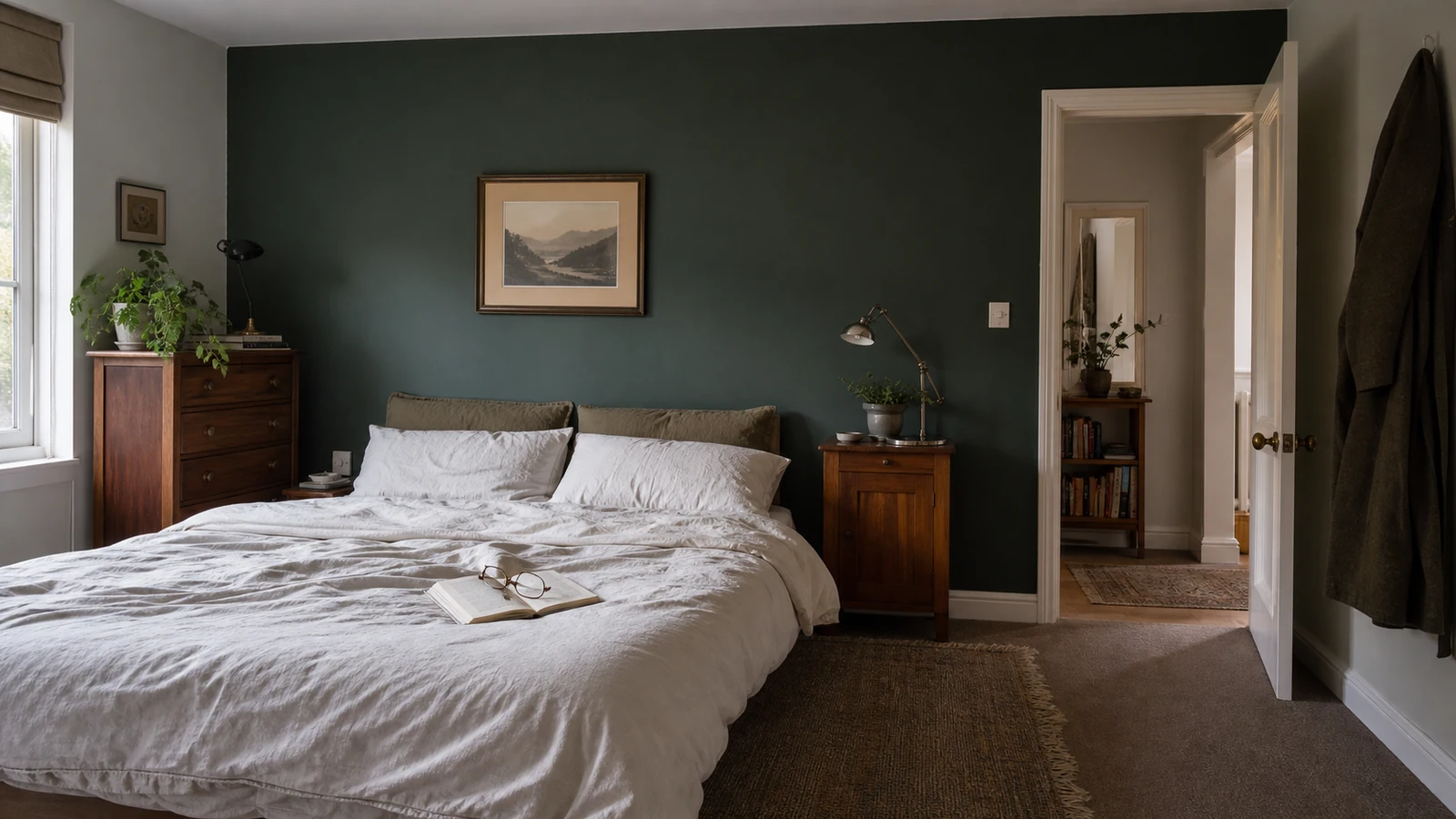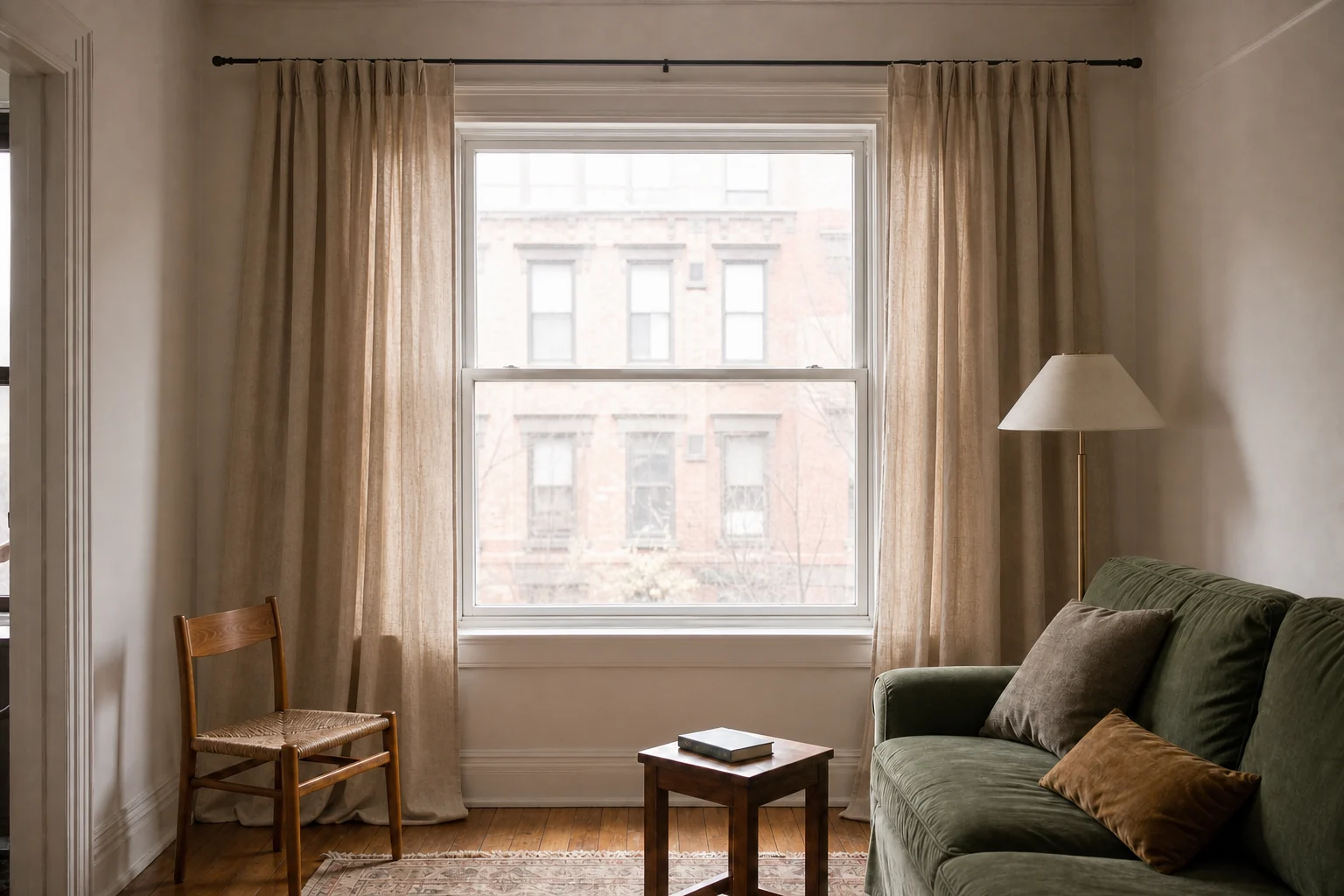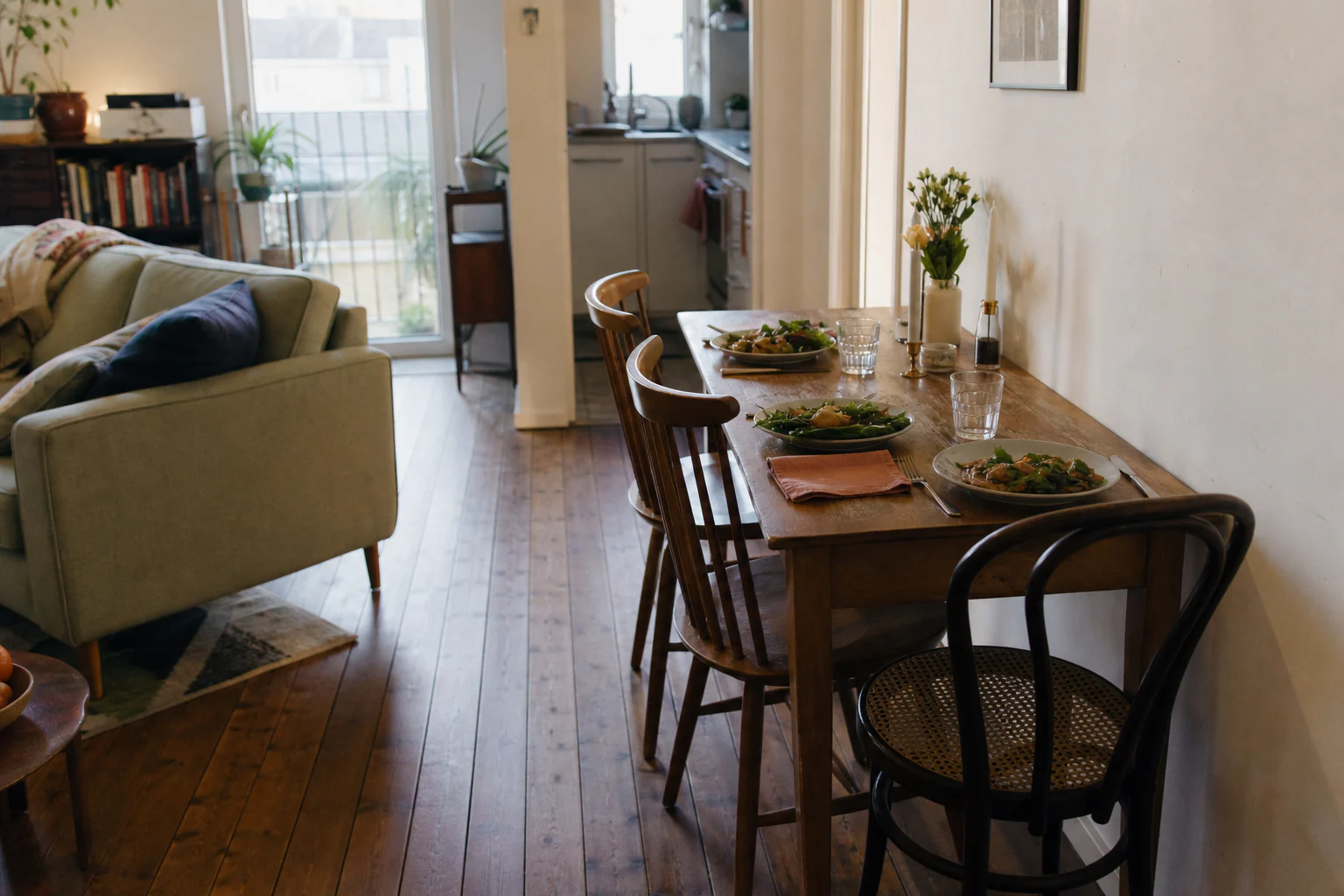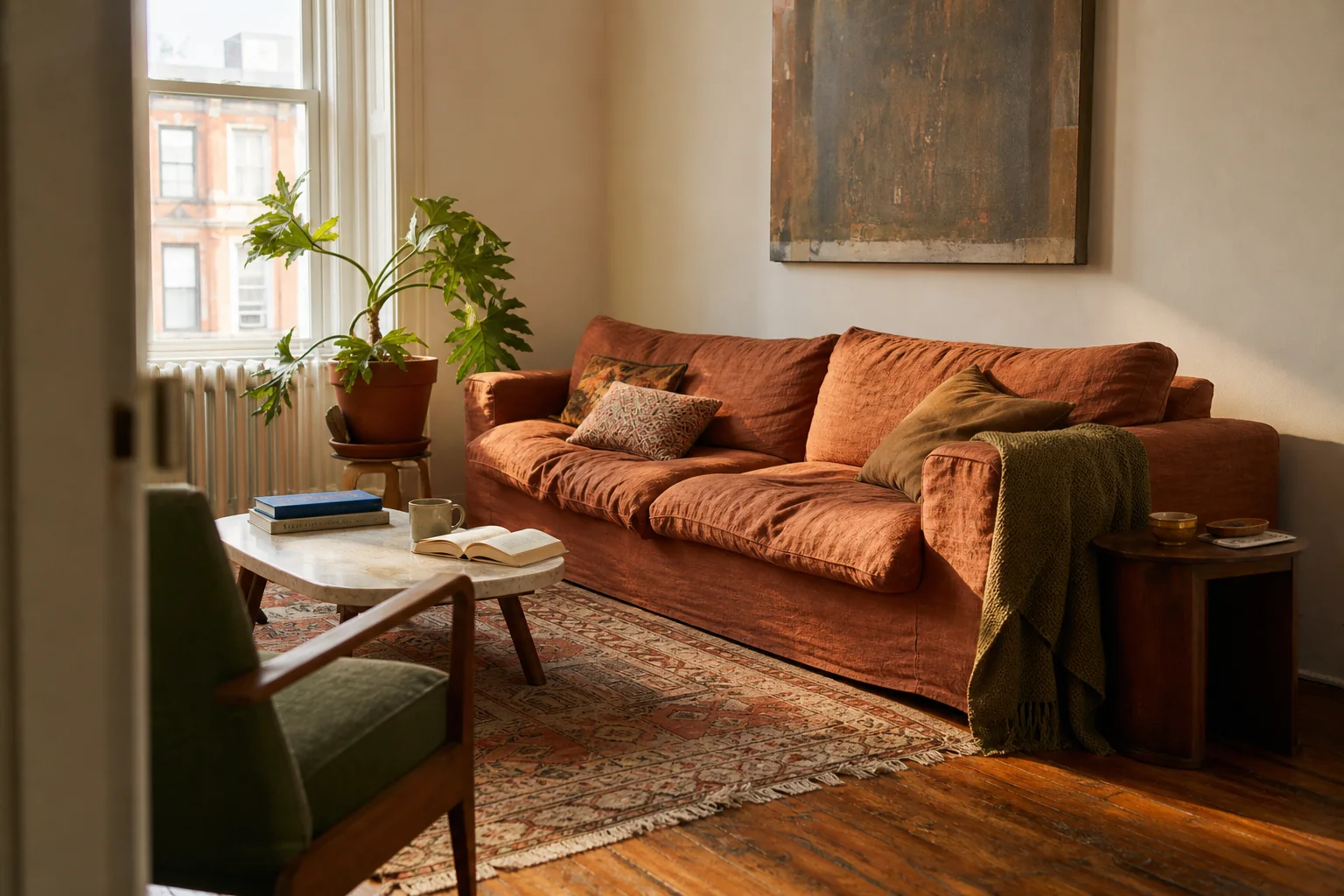
A beautiful room is rarely the result of buying an entire “look.” It usually begins with a clearer idea: how should this space feel, what must it do, and which things deserve to stay?
That is where interior design styles are useful. They give you a visual vocabulary for making decisions about colour, furniture, lighting and materials. They should not become rigid shopping lists—or turn your home into a showroom.
This guide compares five popular styles: Scandinavian, Bohemian, Industrial, Mid-Century Modern and Japandi. You will learn the genuine design ideas behind each look, where the familiar labels simplify a more complex history, and how to adapt them for a rental, a small room, a limited budget or a home anywhere in the world.
Interior design styles at a glance
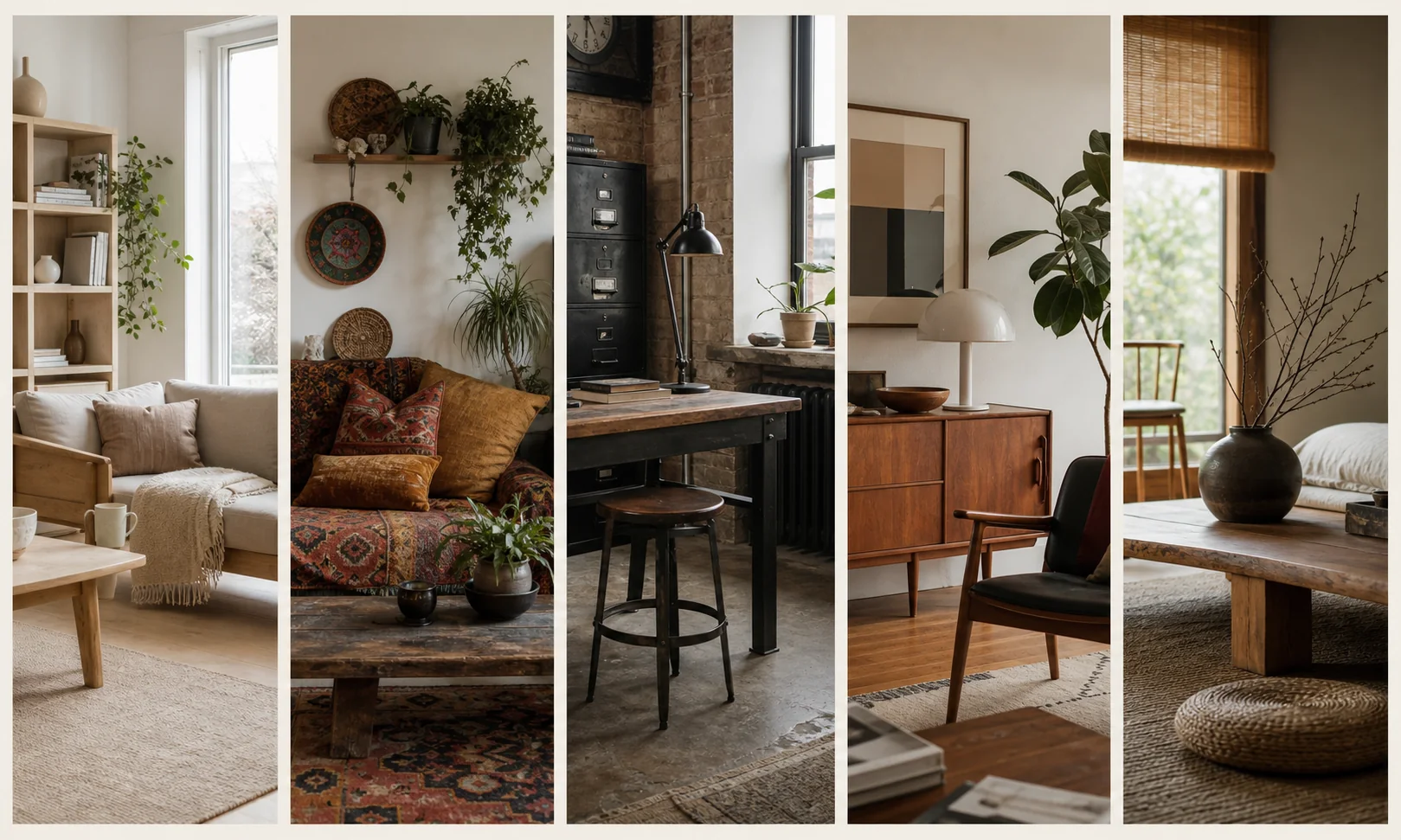
- 01Scandinavian
- 02Bohemian
- 03Industrial
- 04Mid-century modern
- 05Japandi
| Style | Overall feeling | Typical materials | Best for | Common mistake |
|---|---|---|---|---|
| Scandinavian | Calm, bright, practical | Wood, wool, linen, glass, ceramics | Everyday comfort and visually light rooms | Reducing it to white walls and beige furniture |
| Bohemian | Personal, layered, creative | Textiles, timber, cane, pottery, collected art | Colour lovers, collectors and relaxed homes | Confusing meaningful layers with uncontrolled clutter |
| Industrial | Grounded, open, architectural | Brick, concrete, steel, timber, leather | Lofts, open plans and strong material contrast | Adding fake distressing and too much black metal |
| Mid-Century Modern | Clean, warm, optimistic | Walnut, teak, moulded plywood, glass, metal | Compact furniture and uncluttered living | Turning the room into a 1950s film set |
| Japandi | Quiet, tactile, intentional | Wood, paper, linen, clay, stone, woven fibre | Low-clutter rooms and mindful routines | Treating Japanese culture as an all-beige trend |
2. Bohemian style: a home that feels collected, not coordinated
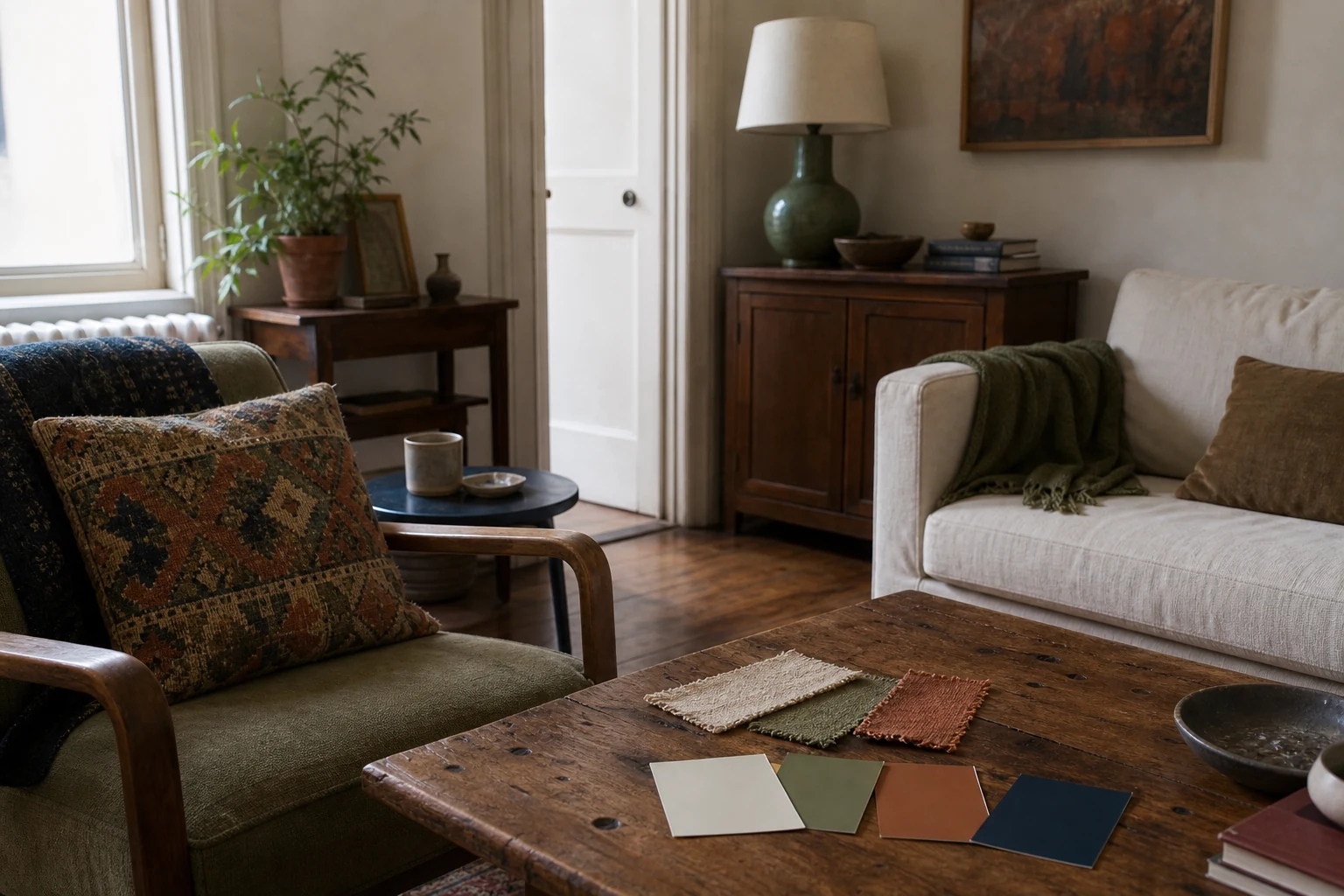
Bohemian—or “boho”—rooms celebrate artistic expression, travel, textiles and objects with a story. A successful bohemian interior feels as though it developed over time: books were read, art was found, a chair was inherited and a textile was chosen because its colour made someone happy.
The name deserves context. The modern meaning of “bohemian” developed in nineteenth-century Europe as a label for unconventional artistic life. Its history also includes inaccurate, romanticised associations with Romani people. Contemporary bohemian décor is not a single culture or traditional craft style. It is better understood as an eclectic decorating approach—and an invitation to name and respect the actual origins of the objects you bring home.
What makes a bohemian room work
- A repeating palette that connects varied patterns
- Natural and tactile materials such as timber, linen, cotton, cane and clay
- Art, books and personal objects displayed with breathing room
- Textiles in different scales: perhaps one large motif, one small pattern and one solid texture
- Furniture from more than one period, unified by colour, shape or material
Layering is not the same as filling every surface. Start with a calm background, choose three to five recurring colours, and leave a few areas deliberately quiet. Closed storage is especially valuable: the room can be visually generous without making daily tidying exhausting.
Shop with curiosity rather than vague labels. If a rug, basket or textile comes from a particular weaving community or design tradition, look for the maker, material and place of origin. Avoid treating unrelated patterns as interchangeable “tribal” decoration. Buying directly from an identified craftsperson, a transparent cooperative or a reputable second-hand seller gives the object a more honest story.
Budget or rental approach: Let textiles and art do the work. Frame postcards or your own photographs, cover an existing cushion rather than replacing the insert, group plants near the best natural light, and use a vintage stool as a side table. One excellent patterned textile has more impact than a basket full of themed accessories.
3. Industrial style: let the structure speak
Industrial style is not one historic decorative movement. It is a contemporary interior look inspired by factories, warehouses and workshops—buildings designed first around production, daylight, durability and large open working areas.
Preservation guidance for real industrial buildings identifies tall volumes, exposed beams and trusses, masonry walls, columns, concrete floors and large windows as character-defining features. Those elements explain why authentic conversions feel so compelling: the architecture already supplies texture and rhythm.
How to create warmth without losing the edge
- Choose one or two architectural materials as the focus, not brick, concrete, steel and pipework everywhere
- Balance hard surfaces with timber, fabric, rugs, curtains and upholstered seating
- Use warm, local lighting to soften dark finishes and high ceilings
- Prefer useful workshop-inspired pieces—sturdy shelving or a well-proportioned task lamp—to novelty factory signs
- Repeat metal finishes so the room feels intentional
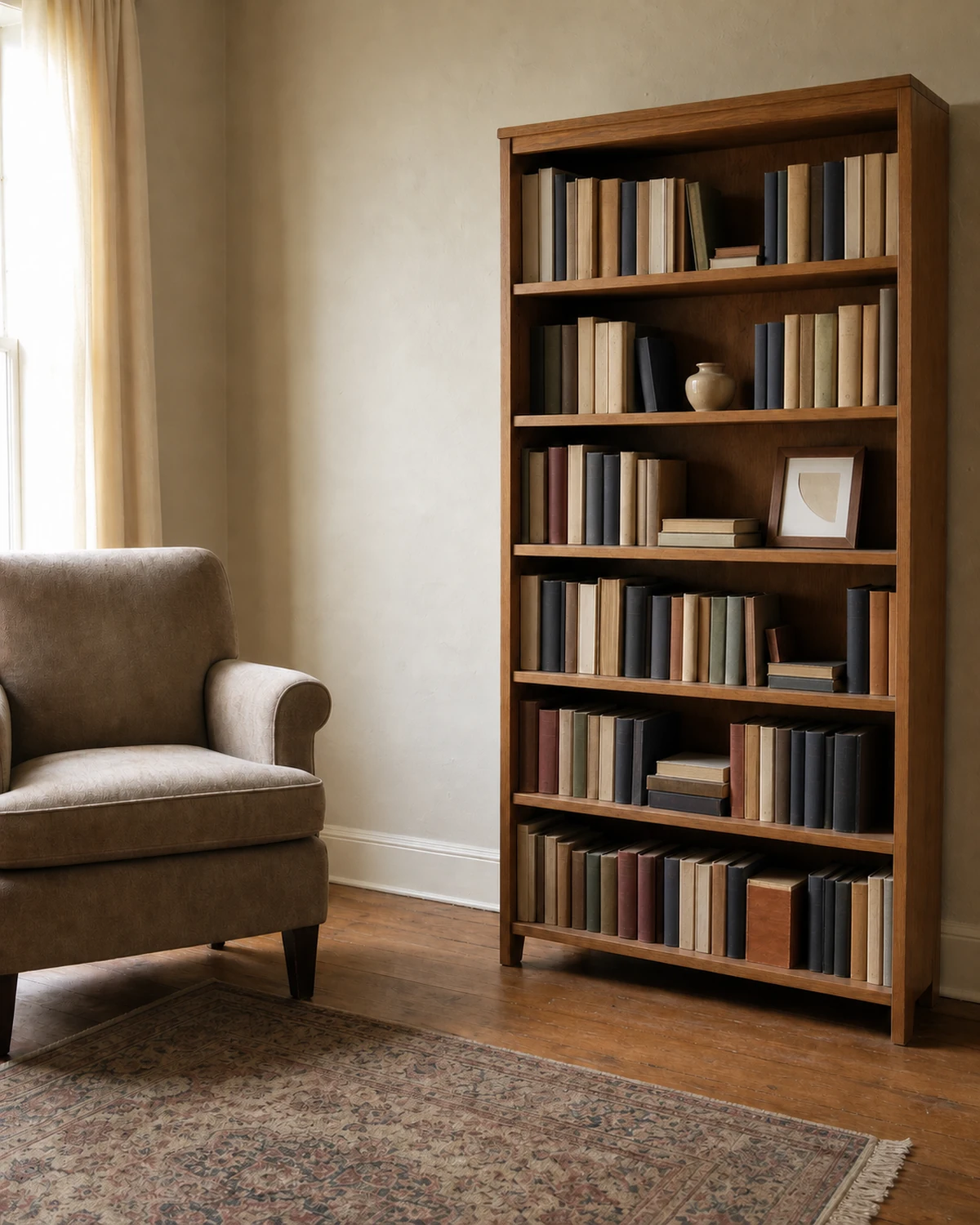
You do not need an actual loft. In a standard apartment, charcoal paint on a bookcase, a timber table with a simple base, a dark-framed mirror and a linen curtain can suggest industrial contrast without pretending the building is something it is not. Never damage a rental wall to “expose” it; work with freestanding materials and reversible finishes.
Industrial rooms can become cold, echoing and visually heavy. A large rug, fabric window treatment, plants and softer seating solve more than a collection of decorative objects. In hot climates, use breathable cotton, cane and lighter local woods in place of heavy leather and thick wool while keeping the clean, utilitarian shapes.
4. Mid-Century Modern: streamlined design made for living
Mid-Century Modern broadly describes design associated with the middle decades of the twentieth century, especially the postwar period. It grew from several international strands of modernism rather than one fixed look. Designers explored new manufacturing processes, moulded plywood, fibreglass and wire while trying to create furniture that was lighter, adaptable and suitable for modern homes.
Charles and Ray Eames developed compact moulded furniture; Eero Saarinen pursued sculptural forms; Harry Bertoia transformed industrial wire into airy seating; Florence Knoll brought architectural planning to complete interiors. The familiar tapered leg is only one clue. The deeper idea is clarity: a piece should use materials intelligently, support the body and work in the room around it.
The elements worth borrowing
- Furniture raised on legs, allowing more floor to remain visible
- Low horizontal storage that keeps sightlines open
- Simple geometric or organic shapes with one strong sculptural moment
- Warm timber paired with glass, metal, upholstery or saturated colour
- A practical connection between zones rather than furniture pushed automatically against every wall
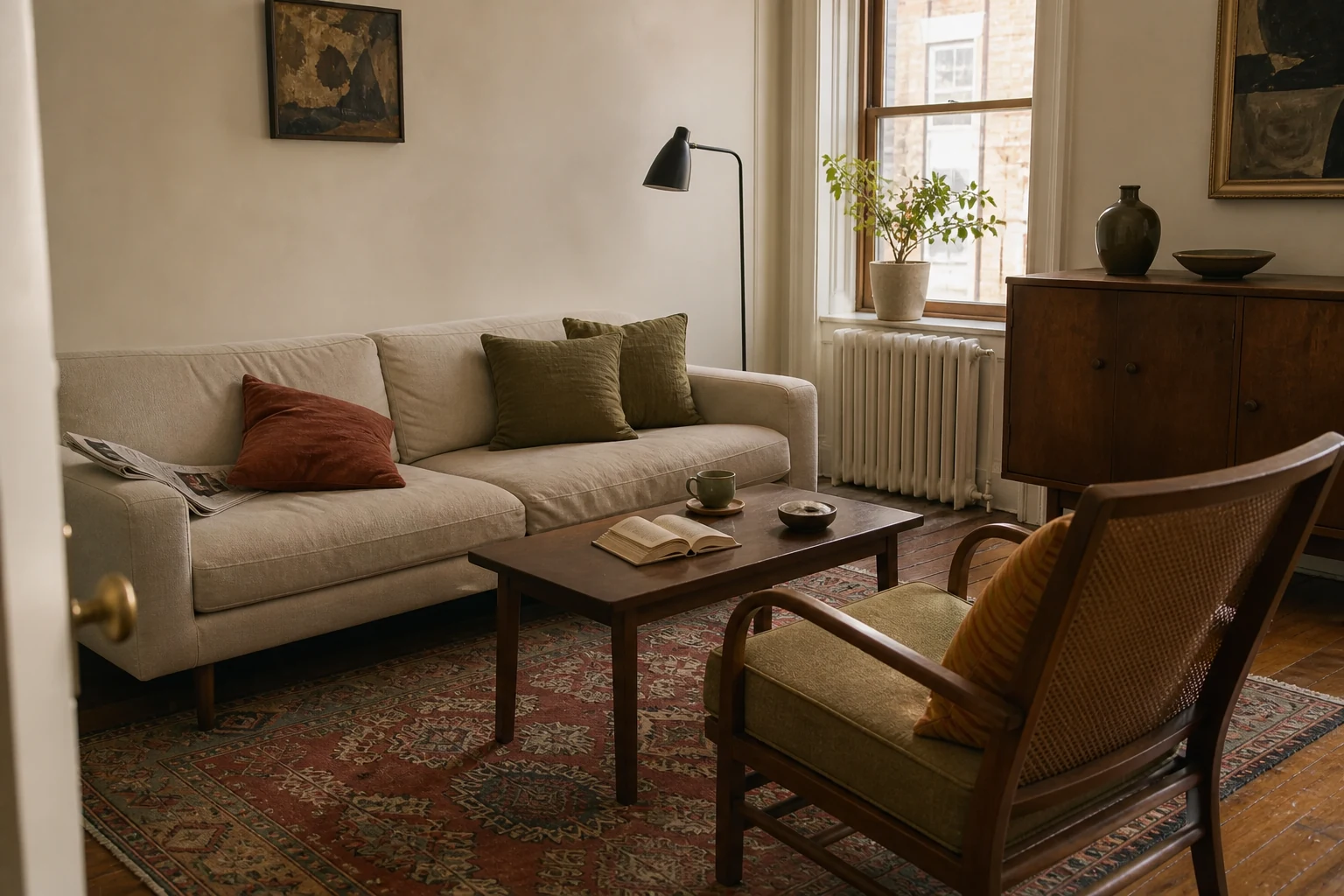
A contemporary Mid-Century room does not need starburst clocks, atomic prints and matching walnut in every corner. Combine one or two period-influenced anchor pieces with current lighting, personal art and a sofa that is genuinely comfortable for your household.
Budget or rental approach: Look for unbranded vintage furniture with solid construction rather than cheap copies of famous designs. A narrow-legged sideboard, a gently curved chair or a globe lamp can establish the direction. Measure carefully: many low-profile sofas look elegant online but provide the wrong seat depth or back support for everyday use.
5. Japandi: restraint, craft and objects that earn their place
Material field notes
The same natural material can speak five dialects.
Use the relationship between finish and form, not a single signature object.
- Pale timberLight + usefulScandinavian restraint.
- Rattan + printLayered + personalBohemian abundance.
- Steel + brickStructure visibleIndustrial contrast.
- Walnut + brassGraphic warmthMid-century clarity.
- Oak + clayQuiet craftJapandi calm.
Japandi is a contemporary styling label, not a traditional Japanese movement. It brings together selected ideas associated with Japanese interiors and Scandinavian design: careful workmanship, useful simplicity, natural materials, tactile irregularity and respect for open space.
The relationship is not as recent as the trend name suggests. Designmuseum Danmark has documented Japanese influence on Danish craft and design from the late nineteenth century onward, including exchanges involving nature, material, architecture and furniture. Even so, “Japandi” should not be used to flatten two diverse regions into a neutral-coloured mood board.
Wabi-sabi is frequently reduced online to rough pottery and beige linen. Japan House London describes it more deeply as an aesthetic sensitivity to simplicity, irregularity, impermanence and the dignity that objects acquire with time. It is not permission to buy factory-made objects with fake cracks. Japanese design also includes colour, polish, ornament and visual exuberance; minimalism is not the whole story.
A more thoughtful Japandi room
- Begin with function and storage so that visual calm is practical to maintain
- Use a restrained palette with real variation: warm wood, ink, clay, moss, stone or muted indigo
- Choose materials that feel good in the hand and improve—or can be repaired—as they age
- Leave deliberate space around a few meaningful objects
- Balance straight, orderly lines with one irregular or handmade form
- Pay attention to daylight, shadow and the view from a seated position
A low-profile room can look beautiful, but it must still suit the people using it. Someone with limited mobility may need higher seats and tables; a family may need generous closed storage. The spirit of the style is thoughtful living, not copying a specific furniture height.
Budget or rental approach: Edit before you purchase. Repair a scratched timber table, group everyday items on one tray, replace visual packaging with simple reusable containers, and add one paper, linen or woven light shade. Choose durable regional woods and fibres instead of importing materials simply to imitate a Japanese or Nordic room.
How to choose the right interior style for your home
Do not begin with “Which style is prettiest?” Begin with these five questions:
- How much visual activity relaxes you? If pattern energises you, explore Bohemian. If clear surfaces settle you, look toward Scandinavian or Japandi.
- What does the building already offer? Industrial details can be celebrated; a bright, compact room may suit Scandinavian or Mid-Century forms.
- What do you already own and love? A style should make your favourite pieces easier to use, not give you an excuse to replace them.
- How much maintenance is realistic? Open shelving, pale upholstery and large plant collections all require care.
- How should the room support daily life? List the activities, number of people, storage needs and accessibility requirements before choosing a palette.
Then write a one-sentence brief. For example: “A warm, uncluttered living room with comfortable seating, hidden toy storage and enough colour to feel cheerful.” That sentence is far more useful in a shop than a style label alone.
How to mix interior styles without creating visual chaos
Borrow without copying
Build a room in three levels of commitment.
A style becomes personal when the strongest signal is supported, not repeated everywhere.
- Foundation70%Useful shapes and major materials.
- Support20%Colour, texture, and lighting.
- Surprise10%One object that belongs to you.
Most memorable homes mix influences. The trick is to create hierarchy. Let one style establish roughly 70 percent of the room, use a second for about 20 percent, and reserve the remaining 10 percent for contrast. These numbers are a planning aid, not a rule.
- Scandinavian + Mid-Century Modern: connect them through warm wood, useful forms and visually light furniture.
- Scandinavian + Bohemian: keep the simple layout, then add expressive textiles, art and collected ceramics.
- Industrial + Bohemian: soften hard architecture with colour, rugs, plants and handmade objects.
- Japandi + Mid-Century Modern: use restraint and tactile materials, with one or two sculptural postwar forms.
Choose at least one repeated connector—wood tone, metal finish, colour family or shape. A room can contain pieces from several periods and still feel coherent when something quietly links them.
The shop-without-waste checklist
Before buying any furniture or décor, run through this list:
- Name the job. What problem will the item solve?
- Measure the space. Check width, depth, height, doorways and walking clearance. Mark large furniture footprints with removable tape.
- Check for duplication. Could something you own be moved, repaired, recovered or repurposed?
- Inspect the material. Look beyond colour to construction, cleaning requirements and how the finish will age.
- Consider repair. Can covers, bulbs, hardware or individual parts be replaced?
- Verify the story. For vintage, handmade or culturally specific objects, ask who made it, where and from what.
- Test it in your light. Bring home a sample or view the colour at morning, afternoon and evening.
- Wait before filling the gap. A room often needs a better layout, not another object.
A useful order of investment is: layout first, lighting second, the largest necessary furniture third, textiles fourth, and decorative details last. This sequence prevents small purchases from consuming the budget before the room’s real needs are solved.
A simple one-room styling plan
- Photograph the room from every doorway and note what blocks movement or light.
- Remove anything that belongs elsewhere, then identify three pieces worth keeping.
- Choose your main style, supporting style and three-word feeling—for example, “warm, useful, collected.”
- Test the furniture arrangement using what you own.
- Improve the light at three levels: overhead, task and low ambient light.
- Add one unifying textile or colour, then stop for several days before buying accessories.
The pause matters. A home reveals what it needs when you live in it for a while.
Frequently asked questions
Which interior style works best in a small room?
Scandinavian, Japandi and Mid-Century Modern all offer visually light furniture and disciplined layouts, but any style can work. In a small Bohemian room, use fewer, larger patterns and closed storage. In a small Industrial room, limit dark finishes to one focal area.
Which style is the least expensive?
No style is automatically cheap or costly. Scandinavian and Japandi can begin with editing and better organisation; Bohemian and Industrial rooms can make excellent use of second-hand pieces; Mid-Century Modern can be affordable when you choose sound vintage furniture rather than famous collectable designs.
Can I mix all five styles?
Yes, but they should not have equal visual weight. Choose one foundation and repeat a limited palette. A simple Scandinavian layout, one Mid-Century chair, an Industrial lamp, a handmade Japanese-influenced ceramic and a colourful collected textile can coexist when the materials and colours connect.
Is Japandi the same as minimalism?
No. Japandi is a modern hybrid label, while minimalism has its own histories in art, architecture and design. A thoughtful Japandi room may be visually restrained, but its emphasis is also on material, craft, use and ageing—not simply owning as little as possible.
How do I keep Bohemian style from looking messy?
Repeat colours, vary pattern scale, group small objects, and leave some walls and surfaces quiet. Store practical clutter behind doors or in matching containers. Displaying ten meaningful objects well is more expressive than spreading fifty unrelated items across the room.
Do all the wood finishes need to match?
No. Two or three wood tones can make a room richer. Match their undertones where possible—warm with warm, or cooler with cooler—and repeat each important tone at least twice so it does not look accidental.
How do I make a styled home feel personal?
Include evidence of your actual life: books you read, art you enjoy, objects connected to people or places, and furniture arranged around your routines. Personal does not have to mean crowded. It means the room could not have been assembled for just anyone.
The takeaway
Scandinavian, Bohemian, Industrial, Mid-Century Modern and Japandi styles offer different visual languages, but the strongest rooms share the same foundation: they are useful, comfortable, edited with care and connected to the people who live there.
Choose the principles that improve your daily life. Keep what already works. Buy slowly. Let the room develop a history. Style gives a home direction; living in it gives the home its soul.
About the visuals in this guide
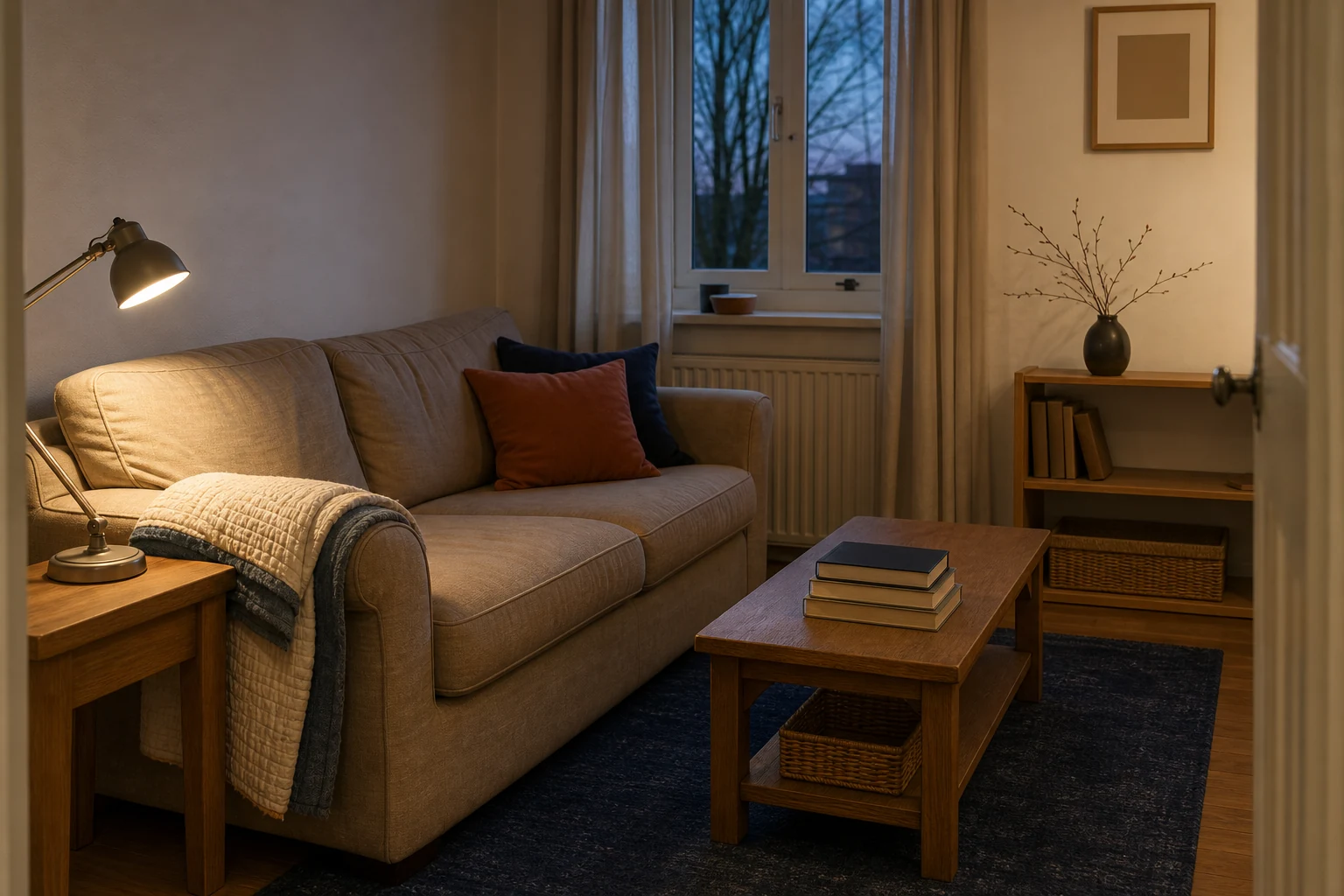
These are original Dealsmaster editorial illustrations produced with AI assistance for explanation and inspiration. They do not document a real household, tested installation, reader result, or professional inspection.
Sources and further reading
- Swedish design — Sweden.se
- Josef Frank and Swedish modern design — Cooper Hewitt, Smithsonian Design Museum
- Alvar Aalto’s Stool 60 and Finnish functionalism — This is Finland
- The history of the word “Bohemian” — Merriam-Webster
- Liberty, artistic clients and historic interiors — Victoria and Albert Museum
- Character-defining features of mills, factories and warehouses — U.S. National Park Service
- Furniture design of the 1940s — Design Museum
- Charles and Ray Eames — Museum of Modern Art
- Florence Knoll, the Bauhaus and complete interior planning — Knoll
- Japanese influence on Danish craft and design — Designmuseum Danmark
- Wabi-sabi and Japanese craft — Japan House London
- Japanese design beyond the stereotype of minimalism — V&A Dundee