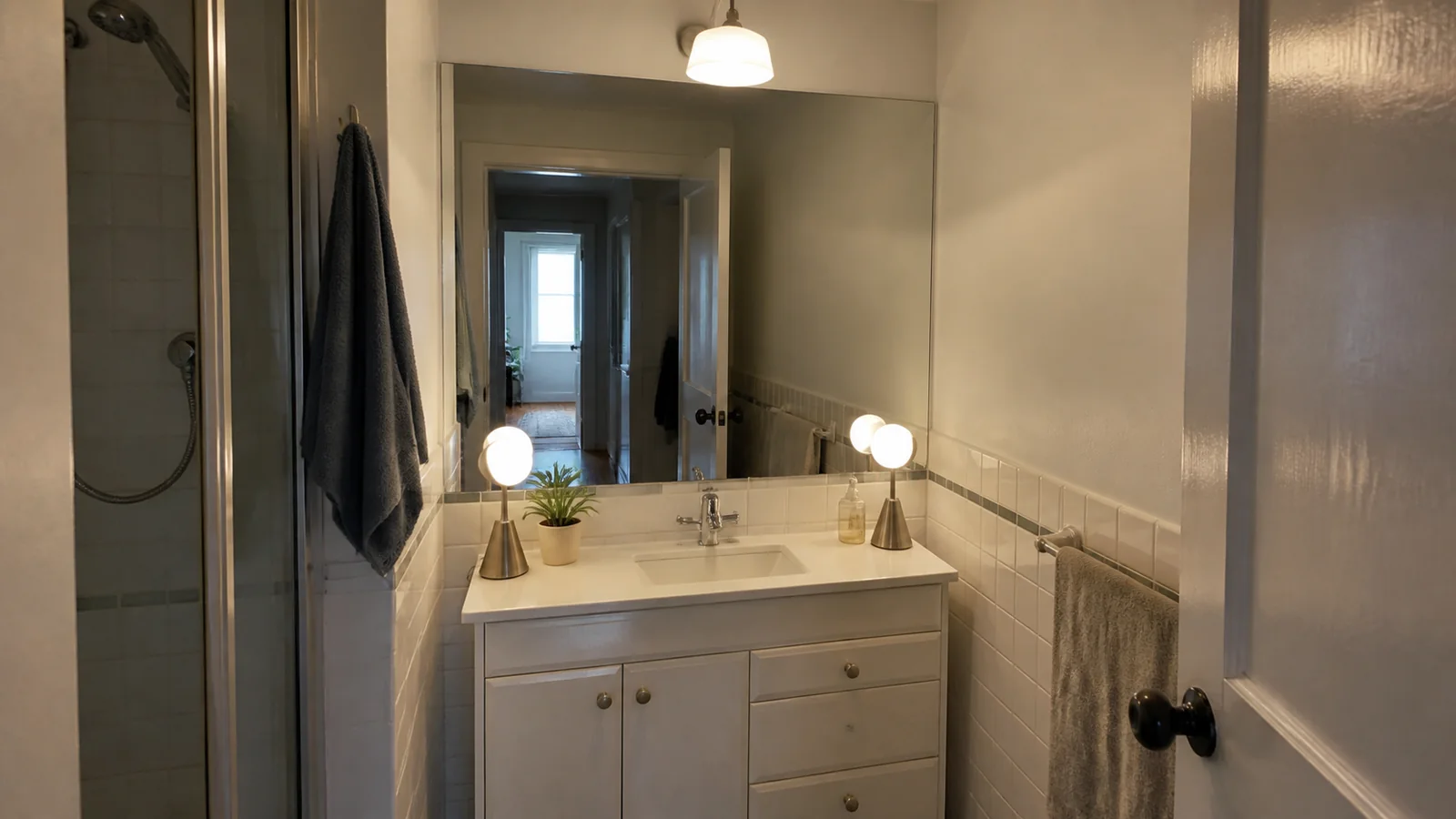
Bathroom lighting is usually chosen from the front elevation: mirror, fixture, vanity, pleasing symmetry. Your face experiences a different drawing. It has depth; your head moves; the room appears behind you; and at night the useful route begins outside the mirror.
This is a rehearsal, not a wiring guide. Use existing safe lights or temporary battery-powered/freestanding sources kept dry and stable. Do not open fixtures, alter wiring or treat a generated room image as evidence of wet-location suitability.
Take four reflections, not one beauty shot
Stand where you normally begin. Record the darkest plane, brightest reflection and whether the source itself enters your view.
Move to the distance used for shaving, makeup, skincare or lenses. Does your head block the light?
Step outside the task position. A bright bare source reflected at the door can dominate a small room.
Use the lowest practical route light. The goal is orientation; save full task light for a task.
Start with mirror geometry
Mark the eye positions of the people who regularly use the mirror. Do not average them into a fictional resident. The top, bottom and width of the mirror affect what appears behind each viewer. A source above the mirror may illuminate the room and still leave deep downward shadow on a close face. Side sources can fill those planes, but a narrow wall, cabinet door or reflected bulb may make a different arrangement more honest.
The three-arrow reflection sketch
Can light reach both sides without the nose or brow creating the whole composition?
Does the lamp itself appear as a sharp bright object from the working position?
Which bright windows, pale walls and open doors become part of the view?
The face-shadow test
Use a blank matte card or your own observation—never a flattering filter—to compare the existing light with a safe temporary source at the side. Photograph only if everyone depicted consents; the card is enough to record shadow direction. Move the temporary source in small steps, not to discover a universal height but to learn which relationship improves the task at your actual mirror.
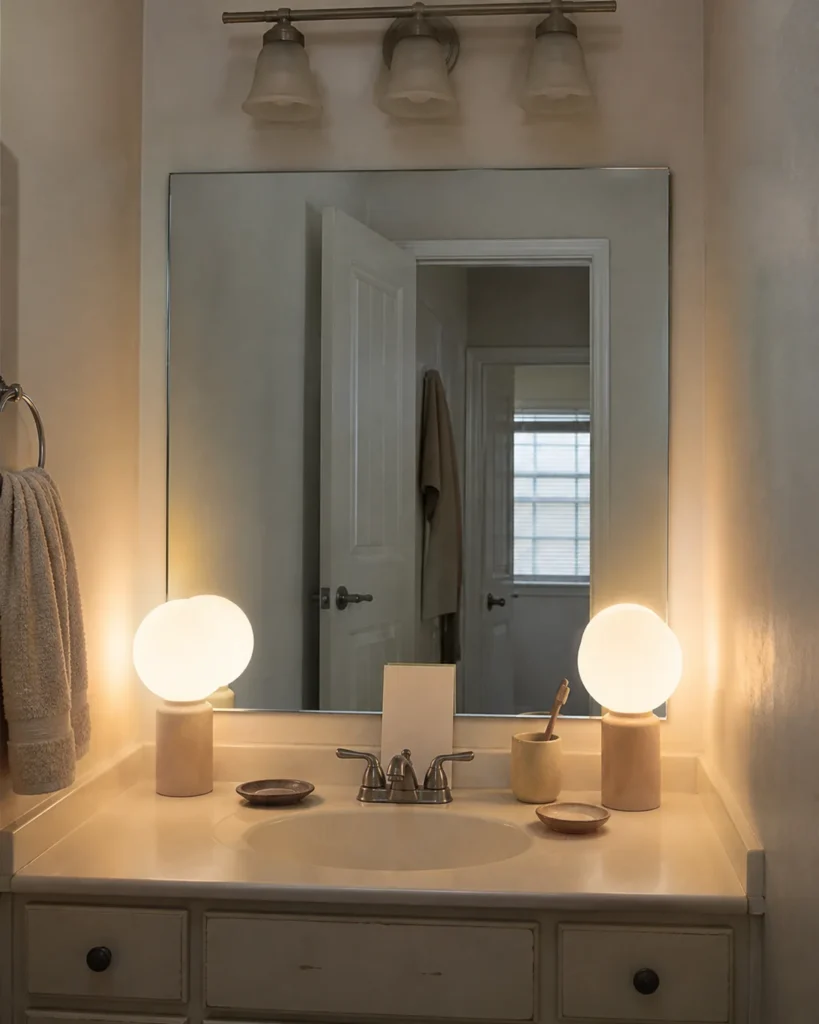
Do not confuse “less dramatic shadow” with medical colour accuracy. Skin, cosmetics, shaving and visual needs differ. Lamp output and appearance also depend on the actual product, controls, room surfaces and viewing conditions. Write what the task requires in plain language: “see the jaw without a sharp overhead shadow,” “avoid a bare globe reflected at close range,” or “separate night guidance from morning task light.”
In a small bathroom, the room is in the mirror
A mirror facing the door can return a hallway light directly to the viewer. A glossy shower screen can produce a second bright image. A pale wall close behind you may become a useful soft reflector. Turn sources on one at a time and photograph the mirror from each eye position. You are not searching for a single evenly lit photograph; you are locating the source of each discomfort.
Give each layer one job
General movement, cleaning and room visibility.
Face and close work from the actual standing or seated position.
Low guidance from doorway to fixture and back out; not a substitute for task light.
The midnight version should be quieter
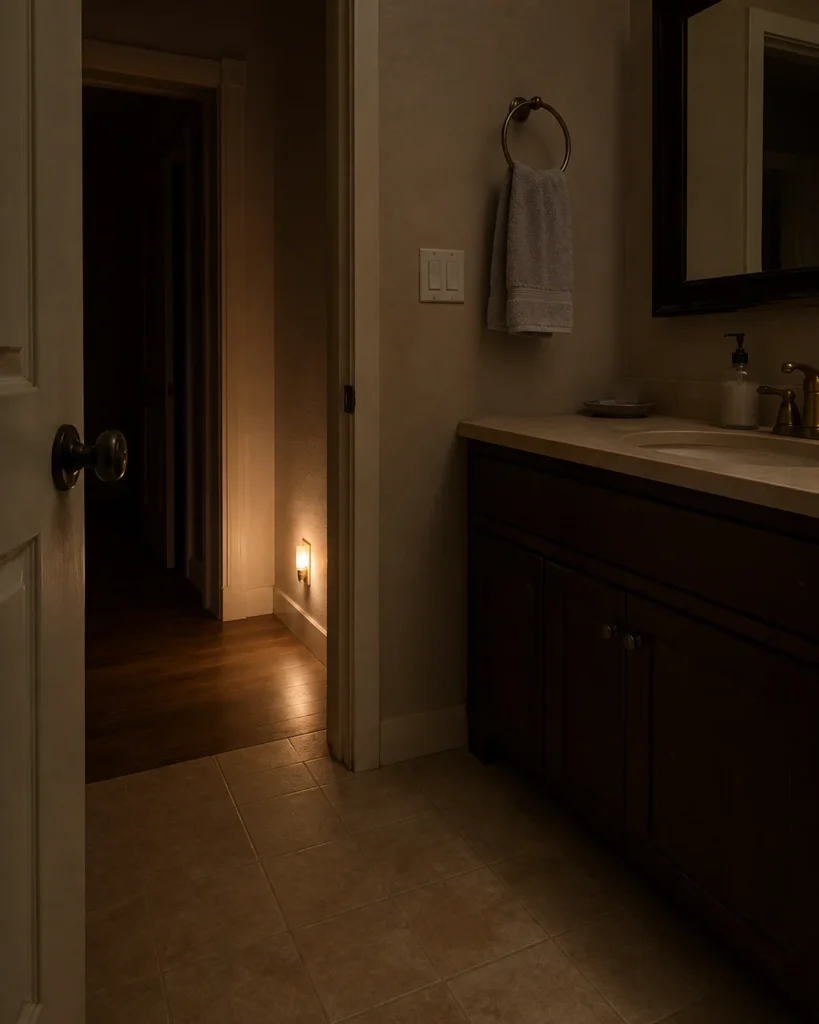
Walk from the bedroom or hall with the bathroom in its real nighttime state. A brilliant mirror can be excellent at 7:00 and punishing at 2:00. Look for a lower-output route source or control strategy that the chosen equipment and local installation can support. Avoid loose cords across floors, temporary lamps near water and any improvisation with fixed electrical work.
Write an installer brief, not a shopping adjective
Mirror-lighting rehearsal card
- Mirror width, height and edge conditions recorded.
- Regular eye positions and close-task distance observed.
- Side, above or surrounding-source mock-ups compared safely.
- Bare-source reflections checked from face and doorway positions.
- Ambient, task and night-route jobs separated.
- Cabinet doors, towel rails, shower edges and clear floor area recorded.
- Fixture ratings, controls, wiring, wall construction and local requirements left for current documentation and a qualified installer.
Keep the verdict short
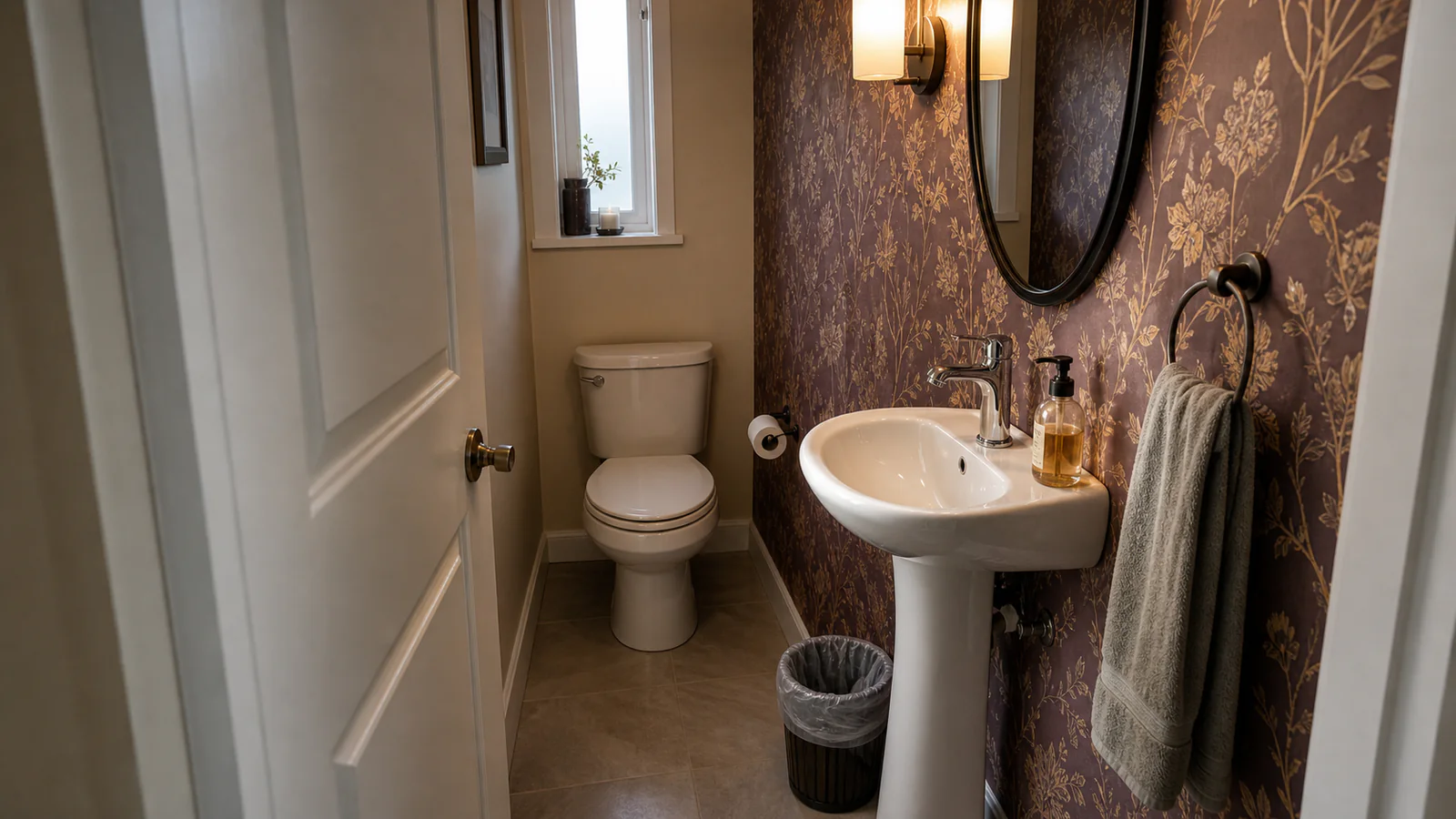
Choose the relationship that improves the real face task without creating a harsher reflection or blocked route. Continue with the indirect-lighting glare guide for reflected light principles, the clear-floor bathroom guide for route conflicts, and the powder-room guest route when unfamiliar users also need the room to explain itself.
Sources and limits
What this guide can—and cannot—settle
These sources provide planning context, not property-specific approval. Product instructions, leases, local rules and qualified advice control where the work becomes structural, electrical, regulated or individual.
- U.S. Consumer Product Safety Commission, publication 513 — Electrical-safety context only; this guide gives no wiring or wet-location approval.
- U.S. Access Board: Clear Floor or Ground Space and Turning Space — Clear-space concepts used for observation, not an accessibility-compliance conclusion.
- U.S. Fire Administration: Home fire escape plans — Night routes should not introduce new obstructions; local conditions control.
No products were tested and no personal household result is claimed. The room scenes are original editorial visual studies, not documentary evidence or compliance proof.