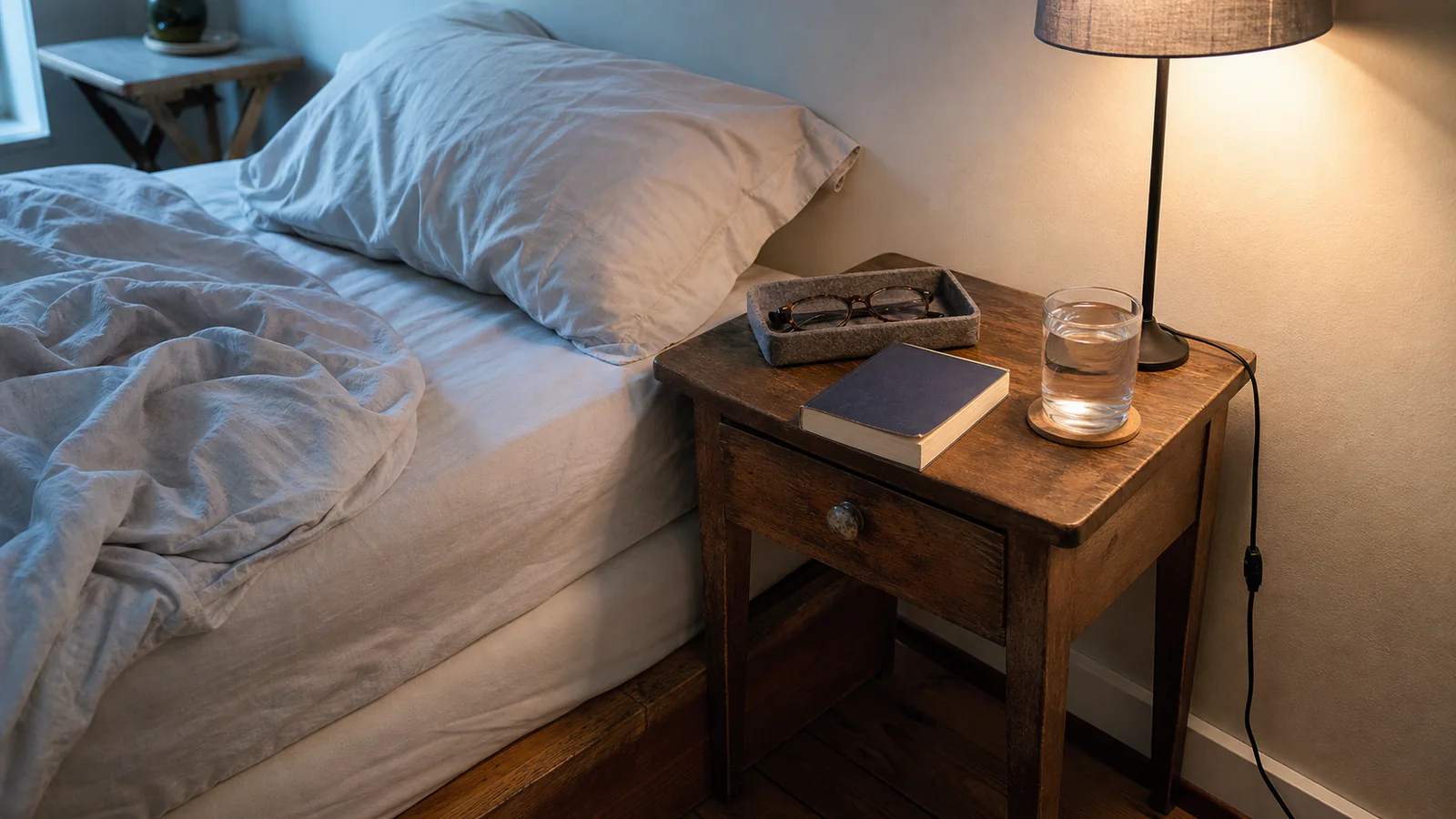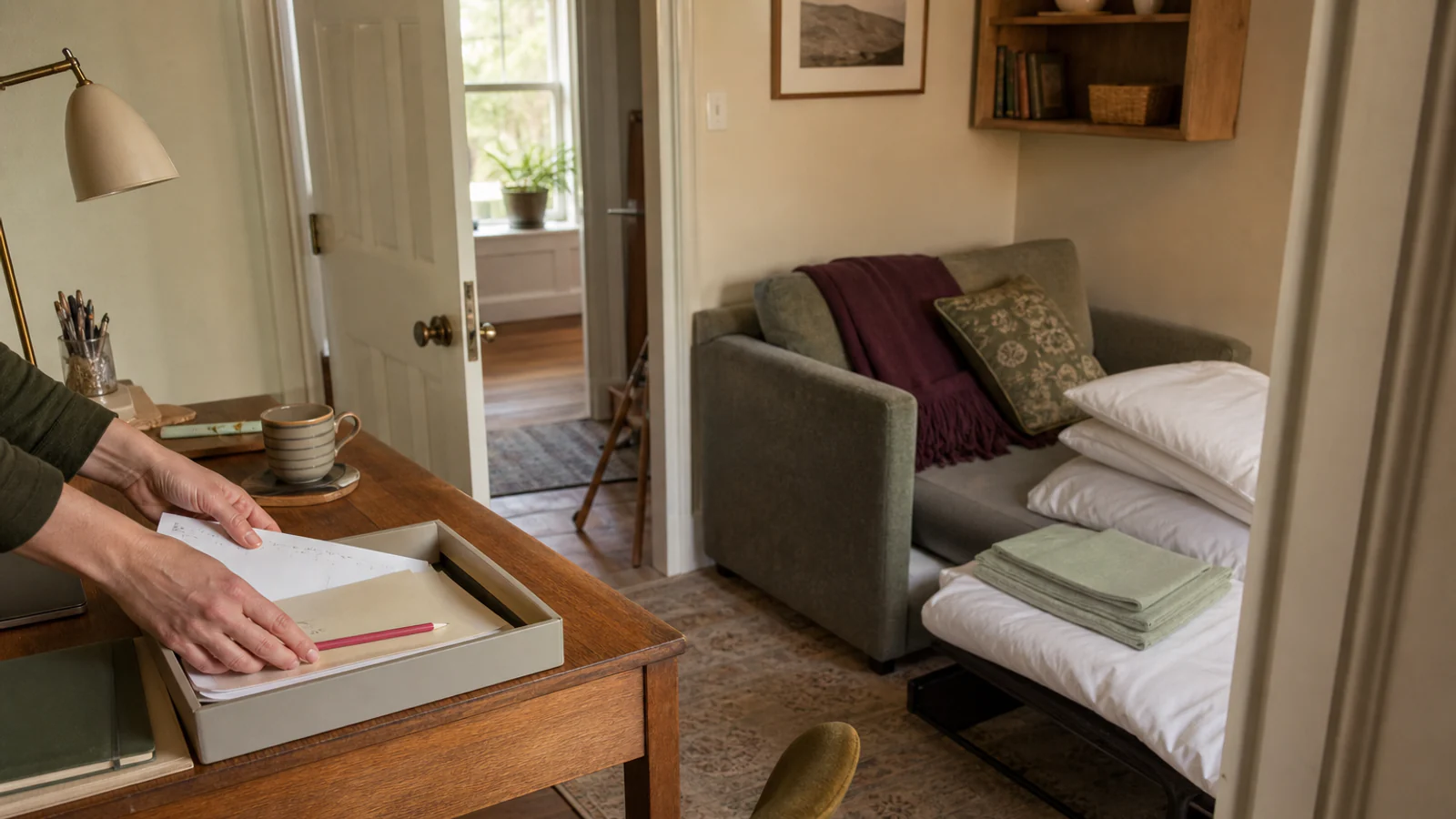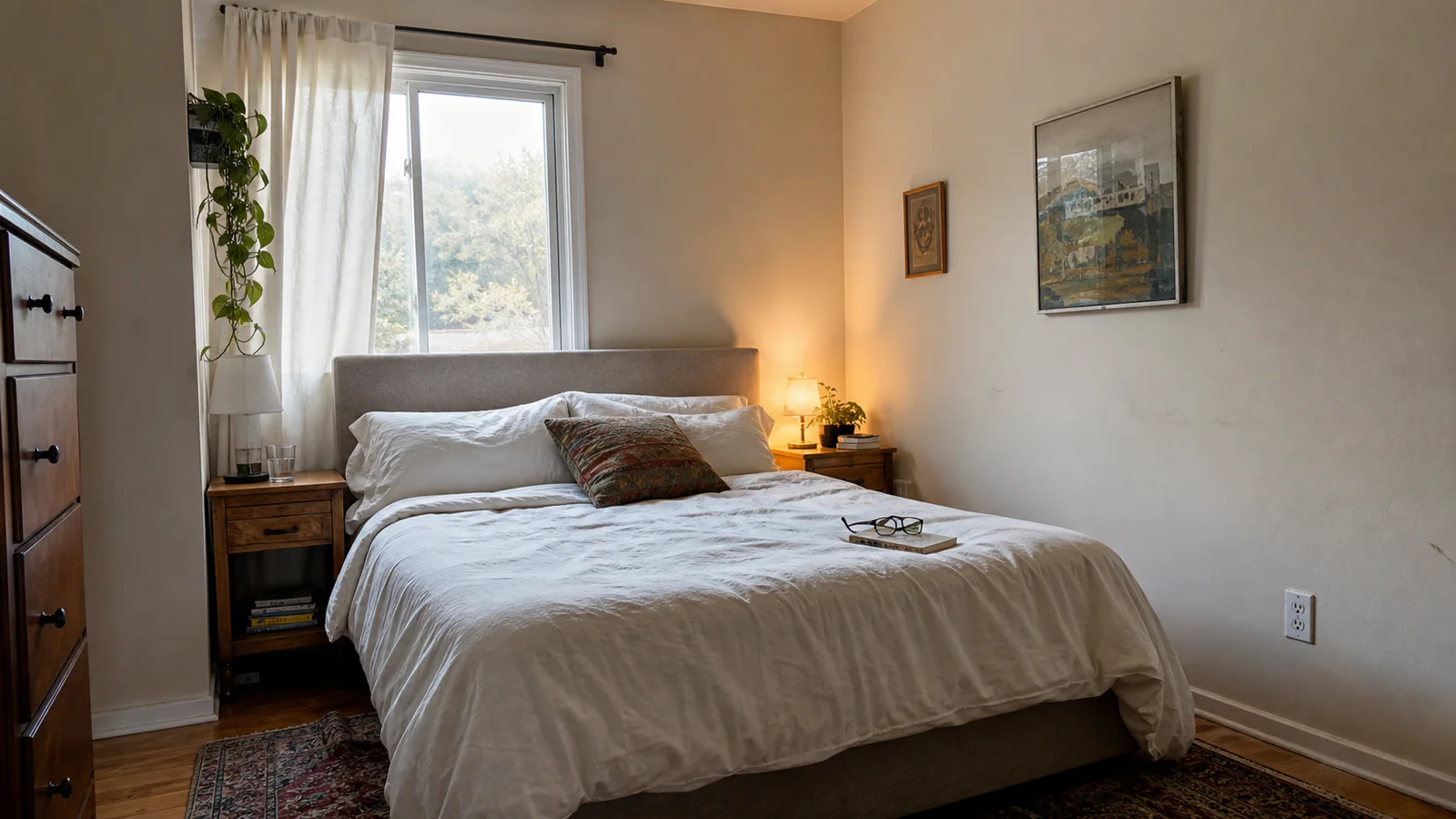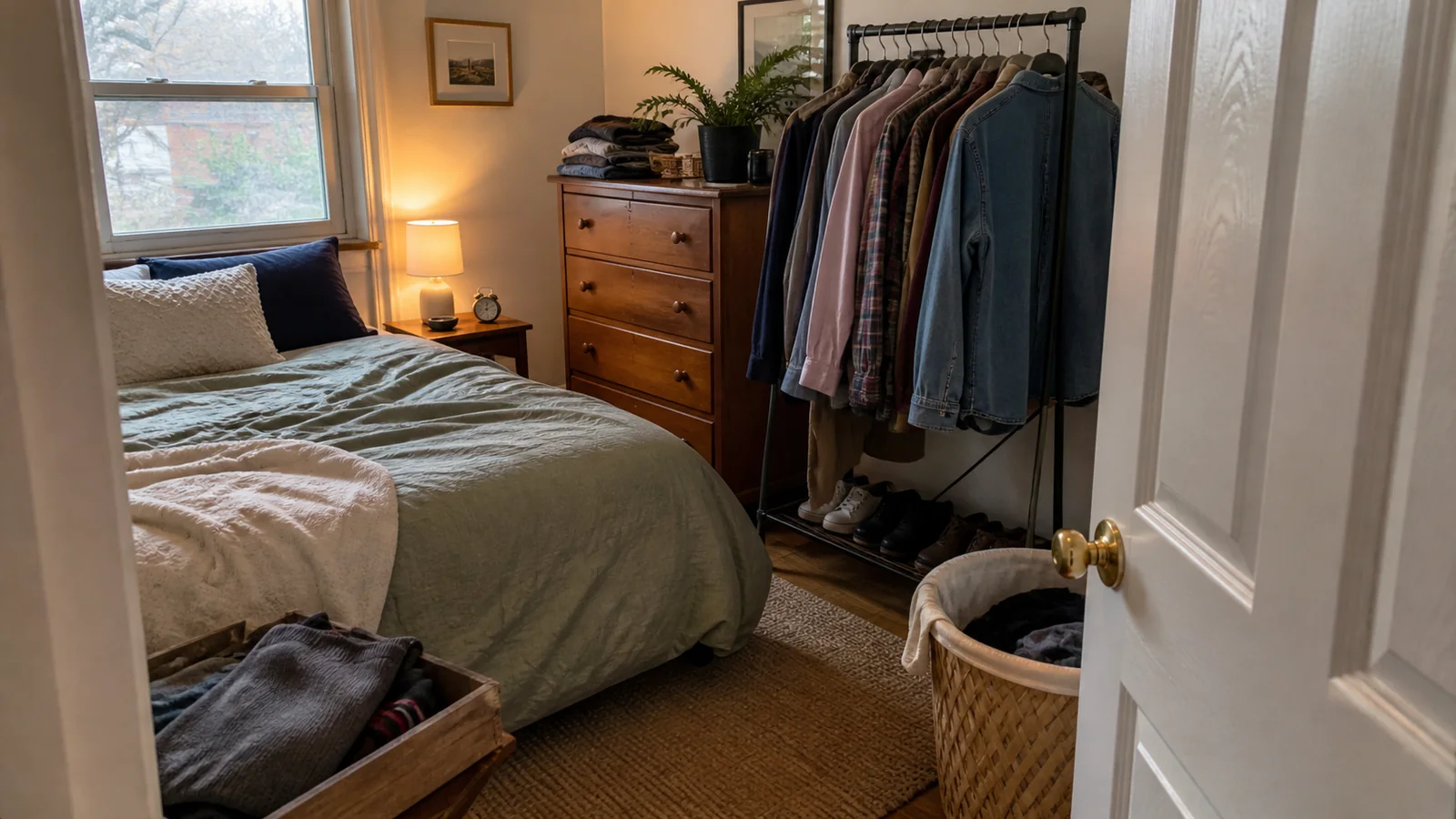
A bedroom without a closet often acquires a rack, a dresser and several boxes in the emotional order of purchase. The result can hold clothes and still fail dressing. One drawer cannot open; the hamper lives behind the door; “reworn” means the chair; clean laundry waits on the bed because returning it takes fourteen decisions.
Instead, follow one shirt. Every state it occupies needs a credible address and a path between addresses. Once that loop works, furniture becomes a specification rather than a hopeful container.
The six-state clothing loop
Where laundry arrives and can be put away without sorting the whole room.
Clothes clean enough to choose now; hanging or folded by handling need.
The item currently on the body or just removed—temporary, not a storage category.
A ventilated, visible-enough place for clothes intended to be worn again.
Contained by wash stream, capacity and the route to the machine.
A small limit for mending, donation, resale or textile disposal research.
Count handling needs, not fashion identities
Make a rough ledger: items that truly need hanging, items happy folded, bulky seasonal pieces, small accessories, footwear, laundry volume and the reworn queue. Count the busiest season you genuinely store in the room, not an imaginary minimal week. Then note how each category is handled. A deep drawer is excellent for rolled knits and infuriating for a tall stack of shirts you disturb daily.
| State | Current quantity | Handling need | Failure today |
|---|---|---|---|
| Ready hanging | Count or estimate | Hang, fold, air, contain or leave | Where does it land now? |
| Ready folded | Count or estimate | Hang, fold, air, contain or leave | Where does it land now? |
| Reworn | Count or estimate | Hang, fold, air, contain or leave | Where does it land now? |
| Laundry | Count or estimate | Hang, fold, air, contain or leave | Where does it land now? |
| Accessories | Count or estimate | Hang, fold, air, contain or leave | Where does it land now? |
| Repair / exit | Count or estimate | Hang, fold, air, contain or leave | Where does it land now? |
Walk the dressing route
Start at the bed. Move through underwear, main garments, shoes, mirror and exit in your usual order. Open every drawer and door. The route should not depend on the bed being made with military precision. Protect the main door and any escape path. If two people dress at once, rehearse that collision honestly.
Choose exposure item by item
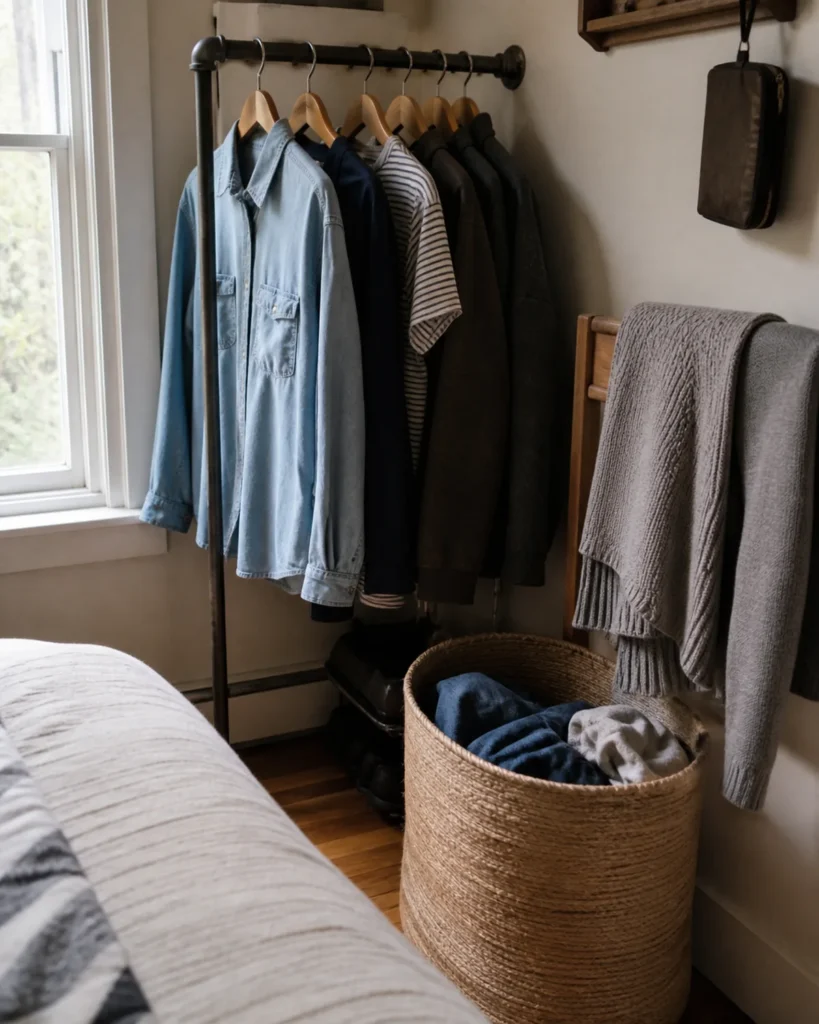
Open and closed are tools, not styles
- The item is used often.
- Visibility prevents forgetting.
- Dust and light exposure are acceptable.
- The rail or shelf remains within its instructions.
- Visual quiet matters near sleep.
- Small items need containment.
- Light or dust exposure is undesirable.
- The opening movement fits the room.
A fabric cover around a freestanding rail may calm the view, but it still needs ventilation and product-specific use. Boxes under the bed gain capacity and lose convenience. If retrieving one blocks the door or requires stripping the bed, it is archive space—not daily space.
Prototype the furniture for one week
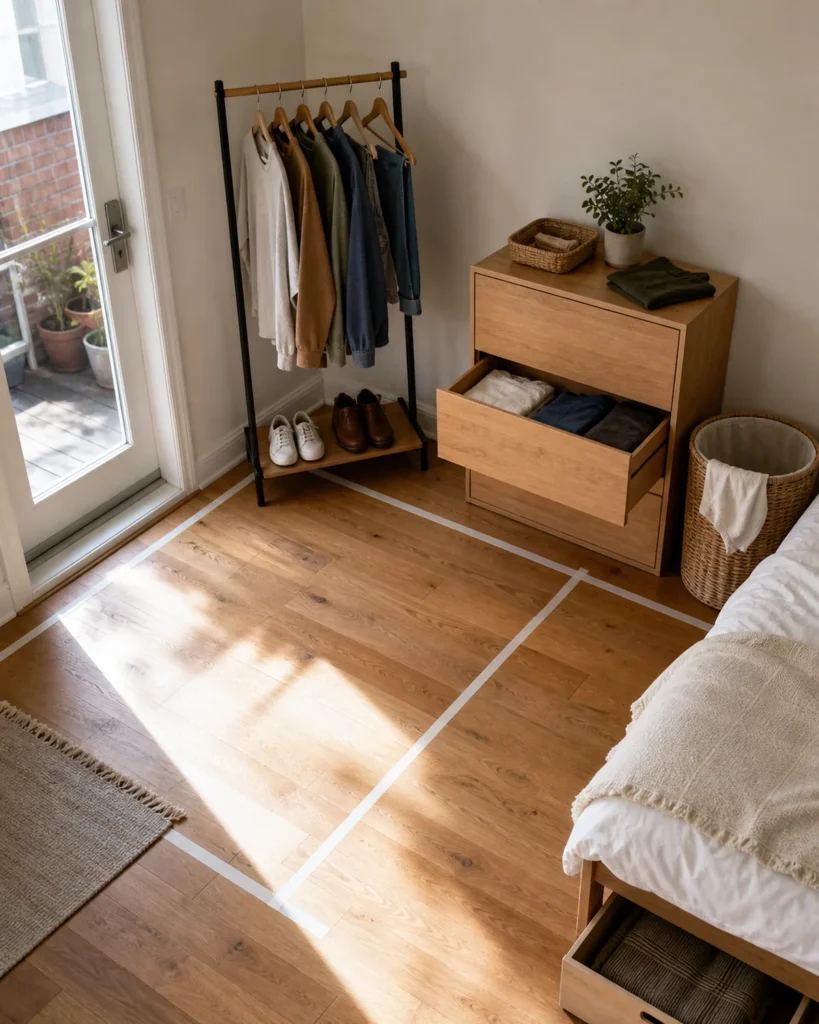
Tape the proposed outer footprint and the operating envelope: drawer depth, door swing, rail access and the place your body stands. Use the current rack, suitcases, boxes or a low temporary surface to mimic capacity. Do not construct an unstable imitation. The purpose is to watch the route, not to build furniture from cardboard bravado.
Worked example: the Wednesday shirt
It returns clean on Sunday, hangs in the ready zone, is worn Wednesday, moves to the reworn rail that evening, is worn again Friday, enters the dark-wash hamper and comes back to the rail after laundry. If any transfer requires the bed as a sorting table, mark that friction. Multiply the worst transfer by a week, not by one perfect morning.
Write the freestanding fit card
- Maximum closed footprint and every opening envelope.
- Required hanging width based on counted garments, not a product photograph.
- Drawer number and depth linked to actual folded categories.
- Dedicated reworn capacity with a strict limit.
- Laundry capacity and route to washing.
- Product load, stability and anchoring instructions reviewed for the exact unit.
- Lease and wall conditions verified before attachment.
Let the route edit the wardrobe
Remove or relocate anything whose only job is to receive undecided clothes. Continue with the reach-in closet morning route if a future home has a closet, the small-bedroom layout guide for bed and walking-space conflicts, and the bedding-and-laundry guide when linen capacity competes with clothing.
Sources and limits
What this guide can—and cannot—settle
These sources provide planning context, not property-specific approval. Product instructions, leases, local rules and qualified advice control where the work becomes structural, electrical, regulated or individual.
- Federal Register: Safety Standard for Clothing Storage Units — Stability context for covered clothing-storage units; current product instructions still control.
- U.S. Fire Administration: Home fire escape plans — Protect exits and ordinary escape paths.
- U.S. Access Board: Clear Floor or Ground Space and Turning Space — Clear-space planning context only.
- U.S. EPA: Reducing Waste—What You Can Do — Reuse and disposal context for clothing and storage purchases.
No products were tested and no personal household result is claimed. The room scenes are original editorial visual studies, not documentary evidence or compliance proof.